
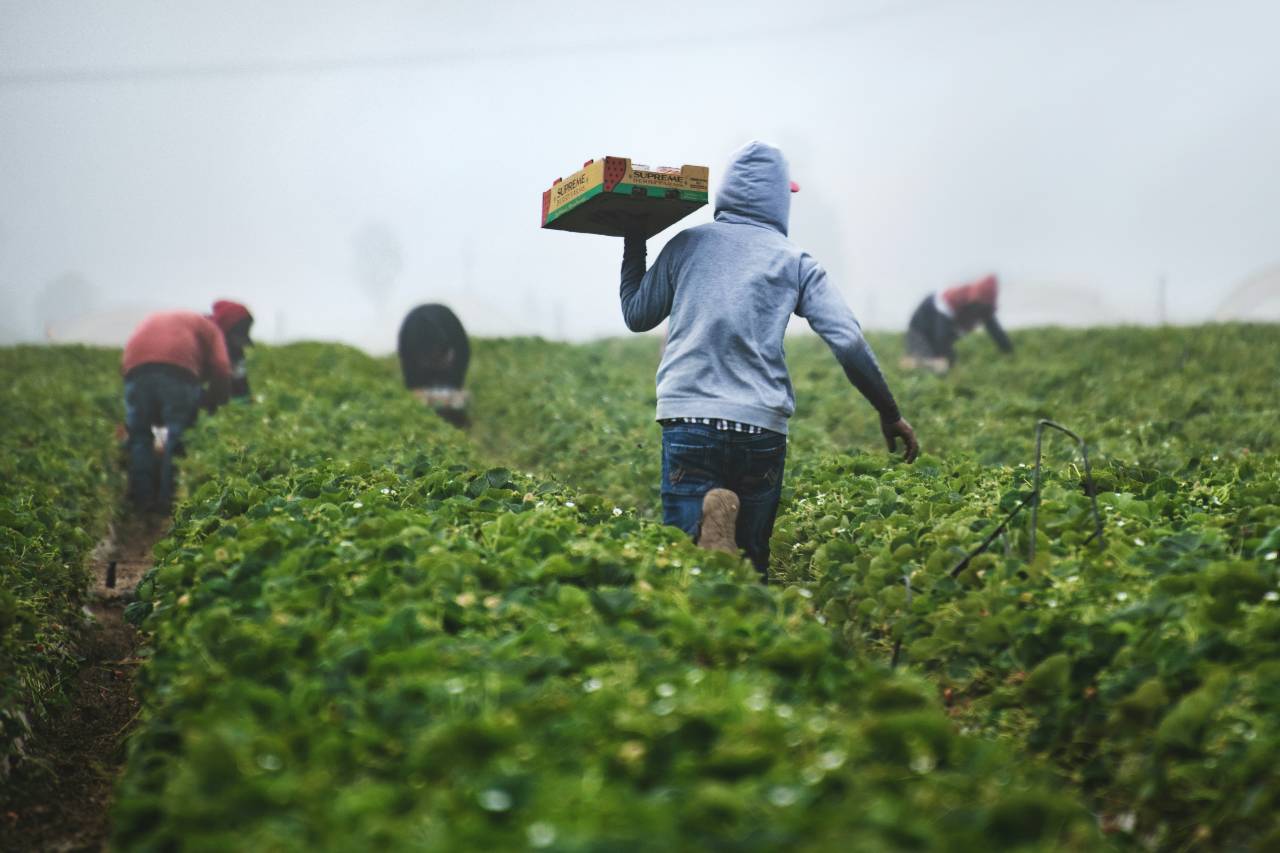
The harvest is plentiful, but the laborers are few.
This is a fascinating image, when we think about it. It speaks to the abundance of the opportunity and the relative weakness of the competition. So, in that sense, what’s the harm in trying?
At the same time, the language evokes work. Like, manual labor. Which is hard. And not what we think of when we think of love and Jesus and doing the right thing.
And the word labor evokes the labor movement, of organizing for worker rights, engaging with compensation, safety, and a commitment to the workers themselves. And with it, the struggles, the violence, the political support given by the state toward the corporate bosses, even turning a blind eye to violence and murder of workers and the violence perpetrated by the police themselves.
Labor evokes struggle and skill, of contending with the matter and making things work. Even as the employers label it as “unskilled”. Even as they can’t find sufficient replacements for the work because it is too grueling, too dangerous, or too physically demanding.
Labor is hard.
Even the other evocation of labor, of childbirth, is depicted as taxing and straining: a slog one must go through to achieve the desired outcome of new life.
This, too, hits like a paradox with a common understanding of faith many have thrown at me. People like to talk about how easy following Jesus is. Like this is supposed to be simple. And that, when I speak to the complexity of scripture, of dealing with different theological convictions, and of working between difference, that is often what is thrown back at me: that following Jesus is supposed to be easy.
“For my yoke is easy, and my burden is light.” He’ll say that in a couple of chapters.
But it is still labor. No matter how much we normalize the vision or claim its ease. To follow Jesus. To just be good. As if it isn’t work. And as if, like most work, it doesn’t require us to do things with and for other people. That’s where it gets the most difficult.
It isn’t easy or simple. It is work. And it is work we do with people. Work we are called to do. That is opportune. For us. For the world.
The harvest is an image of abundance and work and opportunity and trust and hope. A promise of the stuff we are called to participate in and that we have a place in that arrangement. It is hope and grace and love and we get to share it all the time.