
Love and Conviction on The Way
Easter 5A | Acts 7:55-60, John 14:1-14
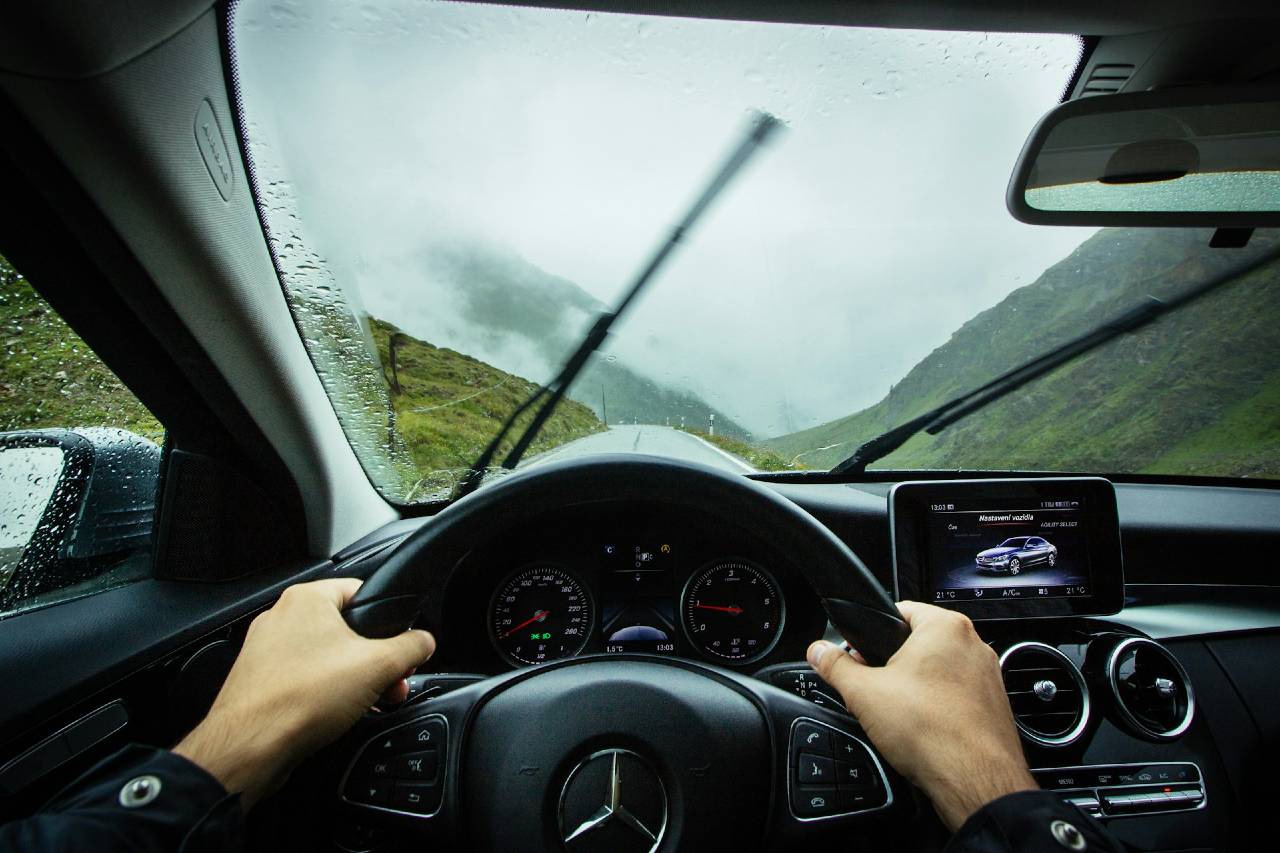
A year ago in January, I was driving down to Lake Junaluska, North Carolina, to a retreat center where I was attending a writing residency, and the weather was temperate, then cold and my car’s tires were acting up like they do when the temperature changes dramatically. It waits until I’m on the road a minute. The car’s sensor kept going off telling me I had low tire pressure and I’d check and top it off and it would go away. So I was nervous about driving so far, that maybe there was something actually wrong and I’d be stuck.
I also felt comfortable – ish about the drive itself. They had all of that flooding the year before, which had done so much damage, washing out roads and whole communities. Parts of US 74 near Asheville were washed away. It was devastating. The whole west side of the state was affected and traveling there was sketchy. People were being routed well around the area, adding hours to travel times. But Google Maps was assuring me that it had found a fair way through that wasn’t bad, only adding about an hour to my trip, rather than the three hours others were reporting.
So I set out on my journey southeast. And around Indy, the tire pressure signal went off. It ended up being nothing, but it put a pall on the whole trip.
Trusting the Authority
Google sent me through Gatlinburg and I was looking forward to driving in the Smoky Mountains. I entered the park still confident — until I discovered, at the last minute, that they closed the only east-bound exit. No reroutes. And then I lost cell service and I didn’t know where to go or what to do. I drove south for nearly forty five minutes with no signs of progress before I backtracked for what seemed like an eternity, until service returned and Google found me a new path, this one winding and at times, kind of sketchy, full of back roads and neighborhoods.
It finally got me to the retreat center, though, and even then, Google couldn’t get me to where I was supposed to be on the sprawling property. I arrived three hours late, five hours past my estimated arrival time.
And then, on the way back, I gave Google Maps a second chance and it tried to kill me again by sending me on a one-lane gravel road up a mountain in the middle of nowhere. Yeah, no. Google and I are still barely on speaking terms.
I felt confident at the beginning. I didn’t know where I was going exactly. I’ve got a pretty good sense of direction and feel I could get anywhere eventually. But when there is a set time and expectations, we need to get there, don’t we?
GPS is different, though. Because we put our confidence in it to get us where we’re going. We don’t have to know anything — as long as its information is accurate. For fans of The Office, cue the scene of Michael trusting the GPS and driving his car into the lake.
Preachers might take this opportunity to be clever here and say there’s only one thing you can trust in: God. And, to make it really stick, say that with God, we have our own set up, our own GPS: God Positioning System. But I’m not that kind of preacher.
Two Disciples
Our gospel today deals with certainty and confidence.
Two disciples try to make sense of Jesus’s talking about The Way. And together, they represent the most common responses people have to following Jesus.
The first is Thomas, who is no-nonsense and ready to go. He’s the one that says Hit me with the truth and asks for Jesus to spell it out for him. He’s looking for certainty of path. Jesus talks about his knowing the way to the father and he’s thinking, I don’t even know the way to Bethany without someone pointing me in the right direction! Spell it out for me, Jesus!
Thomas is trying his best, right? Jesus is displaying far more confidence in him than he feels in himself. So he says what he thinks everyone else is thinking: “Lord, we do not know where you are going. How can we know the way?” And in a literal sense, he’s not wrong. There’s no map and Jesus is sounding like Doc Brown at the end of Back to the Future: “Where we’re going we don’t need roads.”
The other disciple, Philip, takes a different approach to certainty and confidence. Whereas Thomas is willing to jump when Jesus says jump, he just wants to know where he’s supposed to land. Philip is like, tell me why I should and maybe I will. Prove this thing to me and then I’ll follow.
This, friends, is a certainty that has little to do with belief at all.
The Problem with “Prove It”
In one sense, it seems fair. Prove to me why I should believe you. It seems reasonable. A logical skepticism. Even evidence-based. But this is actually opposite to how we develop certainty in the modern world: the scientific method.
We develop a hypothesis based on our observations and then we test it. We don’t seek proof before the hypothesis. But even so, here’s the rub: truth isn’t only proven — it is also defined by our inability to disprove it. We take leaps before the proof and we come to know things are true, not merely because they are proven true, but because we can’t do any better.
Philip’s request isn’t half as reasonable as it sounds. In fact, it is strikingly naive to the moment, to the nature of their project. Especially after following Jesus for so long at this point, for witnessing miracles, hearing of the glory of God in history and experiencing it in the present. He has more than enough evidence already. He’s just being obstinate to put off the leap himself, the thing he is being called to do.
And we get it, don’t we? Jesus has asked them to put everything on the line for this. Leaving family and livelihood behind. This isn’t a ticket to greatness, a free ride to Harvard: a catalyst for success. This is a gap year without job prospects.
Jesus has given them the path to follow, the teaching and practices, the history and the conviction. He’s taught them how to pray and who not to trust. He has opened the scriptures and washed their feet.
It’s up to them to follow. To seek and find. Like baby birds, it is up to them to fly.
Our Turn
This is where we turn the mirror on ourselves and our own sense of conviction and trust, to knowing the way and stumbling forward together. And it isn’t ever easy. We get that, right? That the disciples, the ones who followed Jesus doubted that his teachings were right, that this vision would materially change the world.
And yet they kept at it. Until they could fly.
The lectionary also graces us with a reading about our church’s patron saint, Stephen. A young man who was among the first called by the disciples to assist them in the sacramental life of the beloved community.
Stephen seems the opposite of Philip and Thomas. He wasn’t afraid to act, which, as a phrase, is less a literal statement of fact than an expression of the power of action. That, unlike others who offered excuses for the absence of action, the one who overcomes fear, who shows resolute conviction in the face of violence and the very threat of death with such bravery — we speak of it as if there is no fear there at all. But I’m sure there is. But also conviction and love. Another kind of certainty, predictably found and experienced when needed.
And Stephen stood up and spoke of God’s love and conviction and was killed for it. By the same conviction that led lynch mobs to kill George Ward in Terre Haute a century ago. The same kind of conviction that justifies assassinations and executions, castle doctrines and war, and they took Stephen and bound him and stoned him to death. For love, for God, they said. As he declared the love of God and mercy on them.
Our Work
OK, so the martyrdom of Stephen isn’t our favorite Easter season story! But he is the best patron saint. First deacon, first martyr. Unlike Paul, we don’t have all those letters to deal with — and the pseudonymous letters written in his name. Or John with three different evangelists named John plus the disciple and apostle to wrestle with. No, Stephen is a great patron.
And for us he exists at the intersection of belief and action, of serving and preaching the good news, of commitment and sacrifice. And we are living at a time where this intersection remains so relevant and a willingness to embody it all is essential.
We are called to serve and proclaim. And that takes commitment and sacrifice.
Which might look like standing with those experiencing homelessness as the state tries to arrest them, choosing to house them in expensive jail cells in expanding prisons rather than simple and free apartments.
It might look like preparing safe transport for our neighbors when masked agents enter a sanctuary to rip people away from their families.
To act and proclaim the glory of a God who loves all of their children, who call us to see all of the people we meet as neighbors in the beloved community.
Some of our neighbors might not want this, but it is who we are called to be. Who our patron was.
And it is The Way of Love Jesus followed, taught, encouraged his people to seek. Standing with the marginalized and proclaiming the Good News as beacons of Christ.
May we know that boundless love and mercy, may we feel that unyielding sense of conviction, and may God hold us in his great, loving arms, now and forever. Amen.