Drew Downs

  • For Love, For God — for Epiphany 4A

    For Sunday 
    Epiphany 4A


    Collect

    Almighty and everlasting God, you govern all things both in heaven and on earth: Mercifully hear the supplications of your people, and in our time grant us your peace; through Jesus Christ our Lord, who lives and reigns with you and the Holy Spirit, one God, for ever and ever. **

    Amen.

    Reading

    Matthew 5:1-12

    Reflection

    The story moves quickly up to this point. Chapters three and four fly with the introduction of John the Baptist, the baptism of Jesus, the temptation in the wilderness, and the calling of the disciples. And in the last verses of chapter four, it highlights the expanding fame and interest in Jesus, particularly as a healer. This is important to note as the crowds that have formed to follow the one who heals people and exorcizes demons walks up a mountain and starts to preach a three chapter sermon that begins with a transformative vision we call the Beatitudes.

    Jesus offers a collection of blessings that, taken individually, seem far from the grace of God. And there is beauty here, isn’t there? Because it uses our expectations against us. Blessed is a word we attribute to God’s grace, coming as a reward for good behavior in the here and now. We say we are blessed with love or shelter from the cold or a job during tough times. Jesus turns this on its ear by suggesting that we are blessed in situations we don’t associate with benefit — poverty of spirit, mourning, meekness — and that benefit comes later.

    Imagine these hearers, bringing their loved one to be healed, to follow Jesus as the Messiah, thinking he would deliver them from evil (which implies, I suspect, into greatness) only to have him say: blessed are you when you suffer. If they are stuck on greatness, this is a hard message, but if they aren’t, if all they know is challenge, if all they see is struggle, then all of this hits different.

    When we take them as a whole, too, we can see a message that is way more than comfort and way more than encouragement and is about sharing a fundamental theology of God’s love for those who feel the pain of their neighbors, who long for more for them, for the people of their community, who see the suffering and pray and beg and fight for change and are willing to put their body on the line for it. For the love of all that is good. For love. For God.

  • Blessed when we don’t want to be

    Jesus has a different view of blessing than we hear from prosperity preachers and the kitchen table wisdom of things always working out and happening for a reason. A view that is troubling to the idea that we get what we deserve and that goodness is rewarded and that present comfort is a gift from God and not the project of wealth creation, say, or the fortune of being born into a particular family in a particular time, with all the privilege and none of the guilt.

    This, remember, is a familiar, if not broken theological conviction so popular in the social media era. When people proclaim on Instagram that they are #blessed, like performative humility, gratitude, prayer even. Proof to the world that we are, in fact, good people.

    This is not entirely untraditional, mind you. It remains a common view of God’s vision for the world: that we are in a transactional relationship with the almighty and if we do good stuff, we get rewarded for it. But the timetable is what gets confused. Because we read in Job about blessing and curse in life, so maybe we are blessed with goodness. But Jesus is fairly consistently arguing the opposite. That benefits to a good life don’t fall in the living side of it.

    His words, particularly in the Beatitudes remain resoundingly radical given our world of hierarchies and violence; all the ways we separate and condemn.

    Money, power, ability, gender, expression, race, community of origin, nationality, experience. . .

    And the powerful barricade their “blessing” from the world and it is in this relational poverty, between those at the top and everyone else, that exposes the lie. It is a revealing that Jesus invites with simple relational wording, of participating in an unjust world. One which defies the command to love God and all that God loves — to love one another, this creation — everything — with the same ferocity of as our selfishness.

    So, we are blessed in suffering, in longing for change, in knowing that other people are struggling, and even when we step in and take the lashes for others. And we’re long past knowing by this point that this isn’t reward. It isn’t a proclamation of what is just — all of this brokenness isn’t justice — but we can be the blessing in our neighborhoods.

    And we can literally save lives.

    We can stop the evil. With our bodies, our solidarity, our love.

    This is how it works. How we live to see the reconciliation. Being the change, right? Being the children of God. Loving our neighbors.

  • Transcendent, Beautiful — the call to follow Jesus

    And the call to follow Jesus
    Epiphany 3A  |  Matthew 4:12-23

    Here we go! The more familiar call story. Four dudes in boats fishing. So normal, memorable. If you were around last week, you heard a very different story from the gospel we attribute to John. In that one, John the Baptist points out Jesus to his followers, and two of them break off and start following Jesus. One of those is my namesake, Andrew, who goes off and starts recruiting others, including his brother.

    This story is different, more immediate. And, perhaps more importantly, doesn’t start in a place of contentment and excitement — of following a prophet and having a path forward. Of hope and expectation for a better world. It starts someplace else. 

    It starts with Jesus, alone. Receiving dark news. John has been arrested.

    OK — let’s back up. Rewind.

    The Early Years

    The Gospel we attribute to Matthew sets the stage on page one. It begins with a genealogy, which speaks of how we get from Abraham to Jesus, through multiple stories of God’s grace, through pain and struggle, through women’s ingenuity and faith, even to the point of God’s making Jesus the son of Joseph by blood — meaning, it wasn’t DNA, but God’s grace and intervention and love that make it so.

    Then we move from the genealogy to the birth to the wise men to the exile in Egypt and the massacre of the innocents to the return and the move to Nazareth. That’s the first two chapters. 

    We move forward to the rise of John the Baptist and the baptism of Jesus, which we heard about two weeks ago. And immediately after the baptism, the Spirit draws Jesus into the wilderness for a quarantine, where he dives deep into solitude. And it is there that he is tempted by the Adversary with power, over his environment, the people, and God. This wilderness temptation is not so tempting to Jesus, in the end. He resists, rejects the very idea, and is left alone.

    Like the temptation of power, the story we might be tempted to hear is one of solitude, of loneliness and powerlessness. Emptiness and fear. We could hear that in Jesus’s experience, or read that into our own quarantine with him, as we wander our own wilderness now. But Jesus isn’t tempted or lonely. He doesn’t stay there. He leaves, searches, and finds more. He finds some brothers in a couple of boats. Fishing.

    Darkness and Light

    I don’t want us to leave this transition yet, however. There is hope and excitement and people! People! After forty days alone, the idea of being around people seems so attractive to the hungry, lonely soul. But this isn’t about loneliness exactly. This is about darkness and light, of temptation and resistance, of straying from the Way and the generous love of God. And Jesus has to make his way, traveling to a particular place, here in this spot, where these four young men are.

    The evangelist notably quotes Isaiah here:

    “the people who sat in darkness
        have seen a great light,
    and for those who sat in the region and shadow of death
        light has dawned.”

    Here we are, then! It isn’t Jesus, who is in darkness, for he is the light. It is about the people and their experience. Like the people who flocked into the wilderness to find John, to be baptized by him in the Jordan River. This isn’t a coincidence. This is the same wilderness — the same deadly space of separation and isolation. And yet, it is there that Jesus finds his test and where people find the truth. 

    Let us resist the impulse to make a pastoral rendering of the wilds, however, of our own secluded spaces filled with trees and rivers and woodland creatures and its companion villainy of cities and people and our common life together. This would lead us to misunderstand the message, the conflict, the purpose of Jesus coming into the world at the most basic and counterintuitive level — in vulnerability. As a baby. To be raised by parents who loved him and cared for him, protecting him and teaching him. That he would grow up to be, as we might say today, radicalized by the love of God. To reveal that love in cities and towns and all spaces in between. 

    We have experienced darkness, too.

    Our wilderness isn’t out there, is it? It isn’t in the space between cities, where wolves and bandits lurk. For many of our neighbors, it is also here. Armed masked men breaking windows and pulling them from cars. A judicial system that seems designed to syphon money we don’t have for inevitable outcomes that feel so unjust. Healthcare bankruptcies. Unable to move into safe housing. A living hell.

    It is from within this darkness that people have seen a great light. Living in a region shadowed by death, light has dawned. Isaiah’s promise is being fulfilled in Jesus — and from this place of yearning for safety and hope and joy. This is how Jesus can show up and lead grown men to abandon their livelihood to follow an itinerant rabbi to who knows where on a simple promise. 

    “Follow me, and I will make you fish for people.”

    And he can say this because he has already asked them, called them, promised the world, and all those he meets this same message: 

    “Repent, for the kingdom of heaven has come near.”

    Repent, turn, face a new direction — turn, for God’s dream has come near. That world you want, that world God has been sharing with humanity for thousands of years. That new possibility is close enough to touch. Close enough that you can make it real. Come, help push it over the edge. 

    Making the Dream

    The most memorable part of this passage is the action in the boat, isn’t it? The calling, that great line about fishing for people, the dropping of the nets and the abandoning of the life they are living. All of this is so familiar and exciting. Christians love this story. Because it is about the promise and they are so close and we are so close to it, too. And it can feel like this. 

    The story doesn’t end here, though. For them, it starts here. Like the baptism of Jesus, this isn’t the central story, it is the shot that starts the race, the burst of energy that brings us out of our malaise. But it isn’t the whole story. The story is about a life that has only now begun. A life that is lived with hope and genuine anticipation for the presence of the light in their lives, in their community, in all that they will do.

    It is only more powerful than what comes next from the vantage of darkness. For the light has come. Our reading concludes with verse 23:

    “Jesus went throughout Galilee, teaching in their synagogues and proclaiming the good news of the kingdom and curing every disease and every sickness among the people.”

    Isn’t it amazing? The call story gets the energy but “curing every disease and every sickness among the people” is the summary!

    We treat the darkness like inevitability, like an impossible power. But it also isn’t balanced in the real world either. Darkness arrests our minds and leads us to obsess over solutions. We ask one another about the “right” way to get out or what is the “one thing” that we each can do to solve this common problem: that the darkness has covered over everything and we feel so hopelessly and helplessly alone.

    And yet, the mere promise of Jesus balances this darkness. Even saying his name is light. He brings the dream into the world, making it real, human, alive.

    Dreamers

    Our work then, as bearers of light, of followers of Jesus, as participants in God’s dream for the world is to be co-dreamers. Our creator has made us to create beautiful, newness in this world. To love and redeem, hope and enjoy. To live this life with God’s dream as our own. A pattern that matches our most true and good desires for love and to love, to be shared with and to share, to be known and to know others. To make the beloved community here, in this physical space, with these other earthly creatures, knowing that we can, knowing that it is God’s dream for us, and to find true joy and love in the process. And in the end, God will call it good. I’m confident of that.

    It isn’t one man’s dream, but God’s, ours, shared throughout history, appealing to our better natures, to our common search for peace and love. It is a joy to think about and long for, to envision and to embody. And we do it every time we get together to love. To love. To love every last bit of this space, our neighbors, and what can be. Not just what is, but what we can be. Today. Tomorrow. And every day ahead. 

    Like Andrew, Peter, James, and John, called to fish. To go out, not to collect, but to serve, to love, searching with hope and anticipation, seeking with joy and strength, dropping the nets into the water and waiting, praying, knowing that they will fill, trusting in God’s grace, and then pulling them into the boat, metaphorically, right? Not to hoard and collect and number populations of people, to profit — the metaphor doesn’t go that far. It is about the work, though. It is about our talents, too. The things we are good at. And about the things we need to let go of to make it happen. Like those men in those boats dropping their nets. Literal nets. To come ashore. For a promise. For work. To be a part of something transcendent and beautiful. For all of us.

  • “Attack” is a strange word for protest

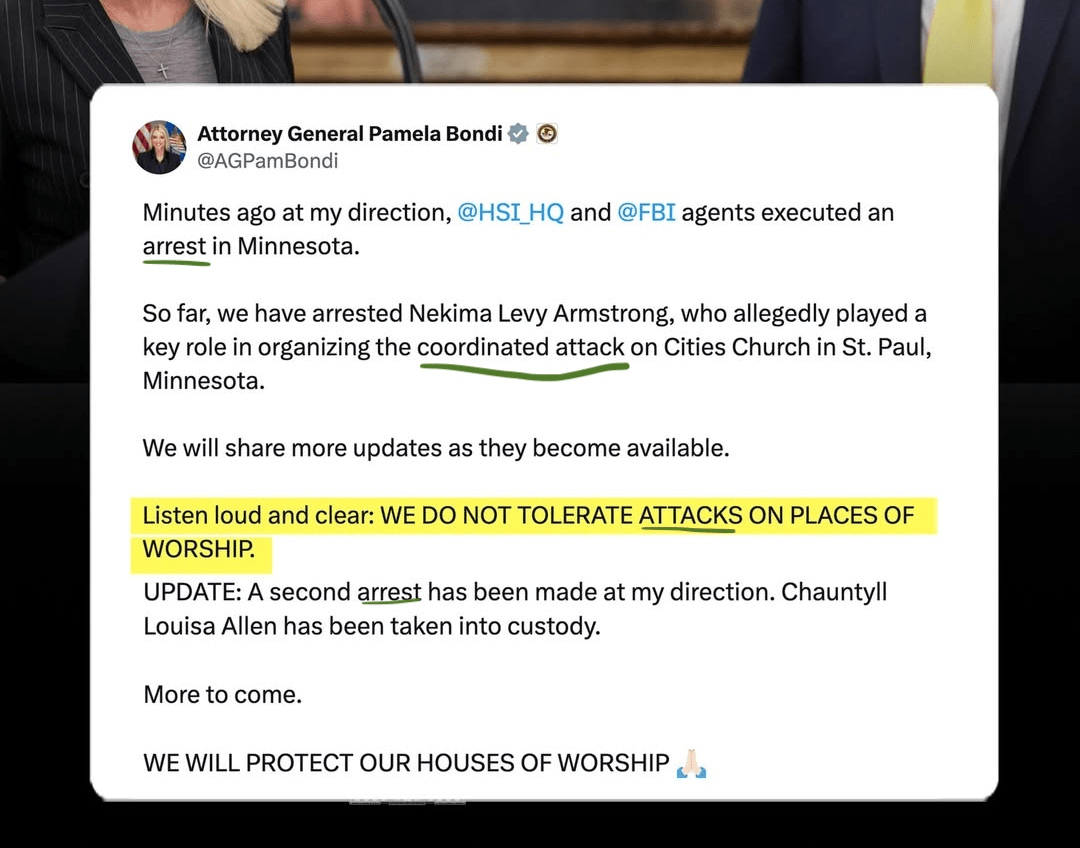
    Attack is a strange word for protest. For standing up to injustice. It’s a shocking characterization. Then I looked up the word.

    Webster’s defines it:

    Transitive Verb

    1. : to set upon or work against forcefully

    attack an enemy fortification

    1. to assail with unfriendly or bitter words

    a politician verbally attacked by critics

    1. to begin to affect or to act on injuriously

    plants attacked by aphids

    To set upon forcefully. To assail with unfriendly words. Huh. Son of a gun.

    So I determined it is, then, something quite close to the right verb. But not in the way they intend. For it to be true it must lose all force behind it; all implication. You know, the stuff it implies. Violence. Hatred. Vindictiveness. Blindsided attacks. 

    And then all of the color commentary that goes with that.

    When the Attorney General of the United States declares that someone attacked a place of worship, one would assume they were armed. That people feared for their lives. Or worse: lost them.

    One would assume the attacker is masked, brutal, overwhelming others with force, gaining entry. That, with others, they walk with paramilitary precision and certainty of conviction as frightened churchgoers in their hats and Sunday best would be scattering, frightened by physical danger, like children at a school or Gazans in a hospital. That’s what comes to mind when we hear this word. Kidnapping children off of city streets or militant thugs cold-cocking innocents. We think of gangs and violence and cowardly brutality. 

    Attack is also a word of instigation.

    It is what South Carolina did when it sparked the Civil War to protect the institution of slavery: it attacked an American military base. The same word is what we use to describe the young man who attended a Bible study at Emanuel African Methodist Episcopal Church and went on to slaughter them. In fact, attack is a word we would use to describe the stalking and killing of Trayvon Martin by a would-be vigilante who was told by police to stand down and yet he still took his gun and shot a boy. And yes, attack is the word we need to use to describe Jonathan Ross’ multiple gunshots to the face of the poet Renee Good.

    If we’re using the word to imply villainous actions, then we need to use it in the right way and reserve it for those cases. Times when humans strike first with vile intent to destroy.

    Oh, but this, too, exposes the lie.

    Christianity wasn’t attacked this weekend in a church. It was attacked in the streets and homes of innocents. It was attacked when ICE agents kidnapped a pre-teen boy on his way home from the store and the five year-old boy they kidnapped and used as bait. The sixteen year-old choked by ICE on the way to school and the six year-old left alone when they kidnapped her dad. It is being attacked by the supposed faithful arguing that God doesn’t support the immigrants, actually; no matter what scripture says.

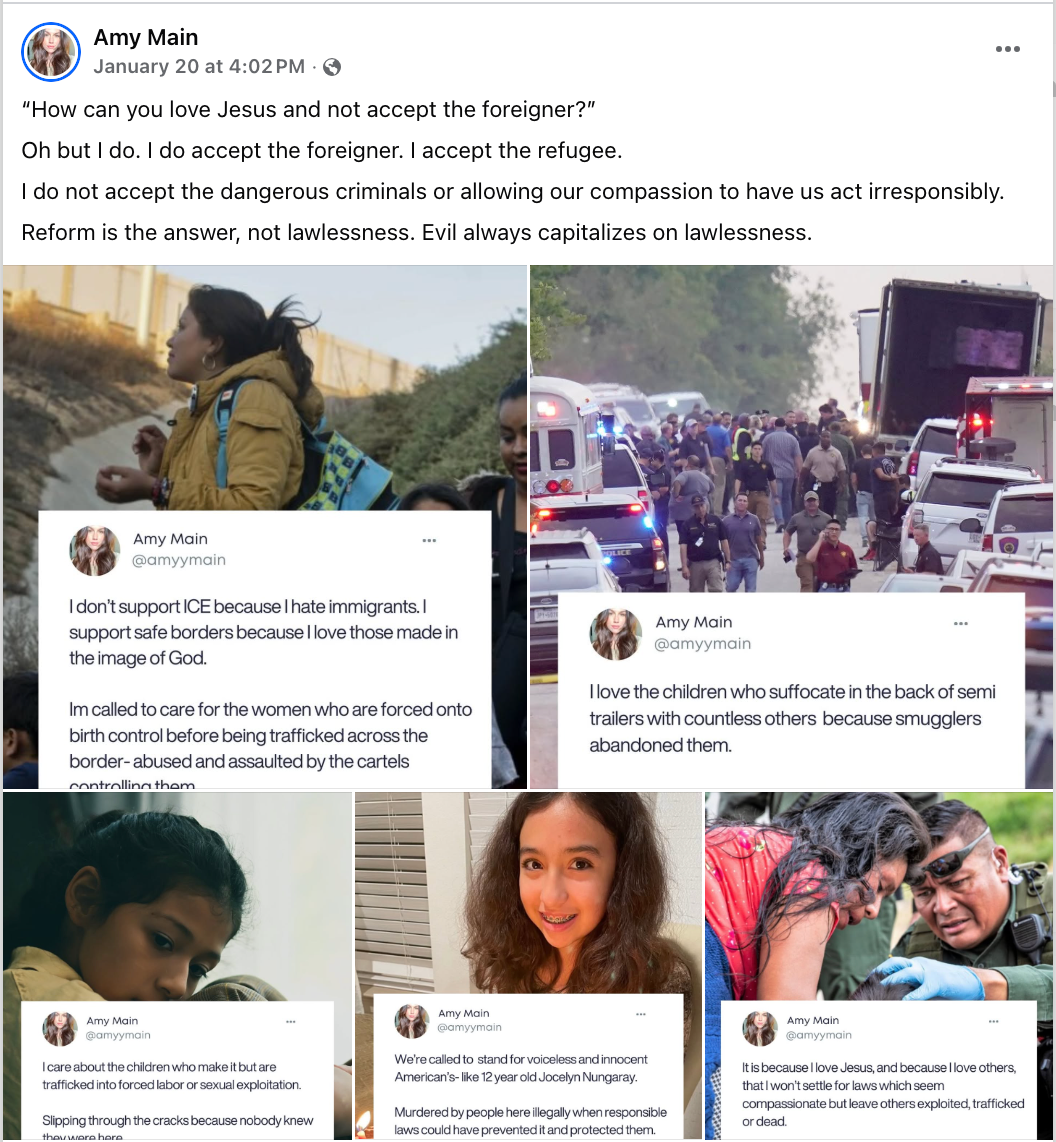
    Christianity is being attacked by people on Facebook sharing posts like this one, which purport to argue against God’s beautiful love of the powerless by picking which people deserve it.  She argues that God loves the law-abiding, not the lawless; the immigrant abused, not the immigrant who protects; the child abandoned by a smuggler, not the child separated by the state; the innocent American murdered by an immigrant, not the thousands of innocents murdered by Americans. Not victims of state violence, just the right kind of victims. In short, not anybody merely living their lives free. 

    “It is because I love Jesus and because I love others, that I won’t settle for laws which seem compassionate but leave others exploited, trafficked or dead,” but this is precisely what ICE is creating. It isn’t the rule of law but selective lawlessness. It is suggesting that ICE should decide who is worthy of protection, love, and justice. This selective distinction of who gets to count as real: real Christian, real American, real human being. And who gets to decide.

    These justifications of violence toward immigrants through dehumanization and a wretched refusal to respect the dignity of every human being defy the baptismal covenant, defy the character of Christ, defy the common character of God: love.

    And yet, if we consider the dictionary’s definitions, holding back all these associations, we can see just how appropriate the word might actually be.

    To set upon or work against forcefully.

    A lot of the weight of this definition hinges on the word force. Often used as a euphemism for violence, the more general understanding of forceful often refers to one’s character. We describe someone as speaking forcefully, meaning with conviction and strong intention. To set or or work against another forcefully can include alleyship, or peacemaking. Standing up to a bully when he’s making plans to give someone a licking.

    ICE attacked the people of Minneapolis.

    And one of their own, against all the principles of theology I learned in seminary, a Christian pastor, who is called by God and ordered by scripture to place no nation (including ours)  above God, joined this federal goon squad knowing he’d be asked to commit acts of violence, break up families, and prey on the innocent. And when Minnesotans figured this out, they worked against him. They stood up to him and his anti-Christ witness.

    If we call this attack, then what these protestors have attacked was infinitely worse. Participants in a mass attack on the public. Instigated by Washington.

    To assail with unfriendly or bitter words

    How friendly should our words to abusers be? How much bitterness should we tolerate? Bitter as the words of God from the prophet Isaiah?

    I have had enough of burnt offerings of rams

        and the fat of fed beasts;

    I do not delight in the blood of bulls

        or of lambs or of goats.

    Bitter for the evil the people have done; who then turned around to do their regular sacrifices to God in the Temple like it’s all good. 

     Bringing offerings is futile;

        incense is an abomination to me.

    These things we’re supposed to do, are now wrong. Why is God pissed?

    Your new moons and your appointed festivals

        my soul hates;

    they have become a burden to me;

        I am weary of bearing them.

    Because the people are doing evil and thinking it is good. Abusive evil. Stop it! Repent!

    Wash yourselves; make yourselves clean;

        remove your evil deeds

        from before my eyes;

    cease to do evil; 

        learn to do good;

    seek justice;

        rescue the oppressed;

    defend the orphan;

        plead for the widow.

    Isaiah shows us what faith looks like: defending the orphan, not making them! And it isn’t the tortured logic I’m so tired of hearing of how ICE is  making an orphan today because a boogeyman brought them here (he’s the real problem, but we’ll deport the kid anyway) and really, the real problem was the parents shouldn’t have endangered . . . just stop it before I scream! Hell, Isaiah wouldn’t have let you get that far even. All clanging cymbals and hideous noise.

    That pastor volunteered to wear his brownshirt. He chose bitter words and actions and faithwashed them as if they were God’s.

    To begin to affect or to act on injuriously

    No injuries, but that isn’t the point, is it? Since we’re selective in who counts as human, who has rights to protection, even who counts as real, then selectivity in injuriousness is going to be on the table. Moral injuries be damned. Most of us have pre-existing conditions of that anyway. Wars started in our names, genocides tolerated. The president is trying to collect peace prizes while murdering people in fishing boats, compromising NATO, trying to steal whole countries like he’s collecting Pokemon. So selective in what counts! What is even real here?

    Yet there is something affirming in raising the potency of a single act of civil disobedience. In calling it an attack, the administration is heightening its rhetorical power. It becomes a true stand against the tyranny of abusers and the malevolence of Christian nationalism. It raises the virtue of the stand against the brutality and the banality of our leaders. And it raises the stakes of our common purpose: which begins by finding common cause, not shoving people out to sea because we don’t want them to count. Hell, racist southerners were willing to count slaves as three-fifths of a human being, which is three-fifths more than these zealots are willing to offer.

    And yet, there is something far simpler.

    It is a mere lie. A lie that is provable by experiencing the world as a rational human being. A lie that Christianity is under attack when it has always been no more than civil war. Just as we are free to wish each other merriment during the holiday season, pray for the success of our sports teams, or to be a bigoted baker and feel justified walking into church on Sunday morning, we are also free to embody the love Jesus in ways that are actually recognizably Christ like: offering water to the thirsty, food to the hungry, aid to the injured. To carry the beaten man to an inn and pay for his stay as the Good Samaritan does or to welcome the prodigal home like he will always be your son. 

    The thing about all of this junk is that the only people fooled by it are the fools — the ones so desperate to be the good guys and exercising their villainous impulses. The ones who put the Punisher skull on their police car and believe The Matrix is a libertarian allegory and not a gnostic/trans one. People trying so desperately to make evil match the goodness of God that it renders it dysfunctional — unless we pretend things don’t exist. Selectively.

    There are reasons why the front lines in Minneapolis and Chicago are full of people of faith. Why clergy are being shot in the face with rubber bullets and maced. And it is the same reason that many Christians are being discriminated against — with laws that demonize trans persons, encourage discrimination on the basis of race and gender, and the dismantling of protections for the disabled. Because these are people of faith, too.

    They’re White Christian Supremacists

    And at the root of this, so often unsaid, refused to be included in these conversations, is the simple truth that Christians of all kinds are discriminated against by other Christians for going to public schools, listening to secular music, or drinking alcohol. We’re discriminated against because we supported gay marriage before it was legal and our predecessors fought for women’s ordination. And, by the way, who do you think marched with Dr. King? Who walked on the Edmund Pettus Bridge and were beaten within an inch of their lives? Inspirations to me, like the late Rev. Bill Boli. And the kind of Christians who were murdered like Jonathan Daniels for saving Ruby Sales’ life from a belligerent racist. 

    So when supposedly good people of faith talk about not disrupting a church service, take a minute to pan out to see the bigger picture. Remember it isn’t just a church service we’re talking about here, is it?And then when we hear on Thursday that federal charges are being brought against protestors, several months after the same administration eviscerated the sanctuary laws that prevent law enforcement from desecrating a place of worship, we have the wherewithal to recognize the problem isn’t a protest. Nor should we center our conversation on the protest. If you think we’re not allowed to confront evil in church, then you’re gonna hate being reminded that church is really the people and we are everywhere.

    The tradition of Jesus’s Way of Love is not endangered by protestors demanding a pastor act more like Jesus. Our country has a long history of demonizing those people who actually do.

  • A Beautiful Gift — Of Tending Sheep and Watching Stars

    Christmas 2A  |  Matthew 2:1-12

    On the eve of Christmas, we gathered to sing and celebrate the birth of Jesus, the incarnate one, the hoped-for king. He was born of a virgin, protected by her fiancé, to be the true parents of the messiah. We gathered and we heard the good news and proclaimed joy to the world. For many of us, it is the best night of the year.

    We heard a story of the couple traveling to Bethlehem to be counted, seeking a place to rest, and the baby being born, placed in a feeding trough to double as a crib. It is a recognizable story, pastoral and memorable. Humble, yet joyous. And then an angel appeared to shepherds keeping watch in the fields. Laborers who work nights. Working class heroes, watching, protecting the sheep when God came into the world.

    Shepherding isn’t a glamorous job. It’s dirty and thankless. Jewish shepherds lived outside with their sheep in a constant state of ritual impurity. This is emotionally and spiritually painful work. Which is why it was often forced labor, done by prisoners and indentured servants. Not the sort of people parents usually want around their newborn. Around the future king.

    No purity in that room that night. Just grace and truth.

    The Wise Men

    We move to Matthew’s gospel, to a later time in the story, when some star watchers, eastern astrologers, probably from Persia, are moved to travel west. They had a vision. A curious vision. And a star that just seemed to appear in the sky, mesmerizing, like a voice whispering “follow me.”

    These travellers are often called kings, but they weren’t. And the text doesn’t number them or name them either, but we have tradition filling in the gap. Three gifts, three wise men to give them, each carrying a box — delightful symmetry.

    These men are drawn by a promise, like the shepherds. A dawning of a new era. Freedom and love and for once, hope. We get why the shepherds arrive, right? Because the promise of freedom is enticing — from within that closed world. But these travellers aren’t from there. This isn’t their tradition. The baby won’t be their king.

    And yet . . . they are drawn. Curious, isn’t it? They are drawn and they want to go and see and pay homage. These aren’t visiting dignitaries — we need to remember this — but are drawn to this foreign land to someone who could be their own. Who could mean something to the whole world — not just the nobodies in Judea.

    And as they get closer, they stop trusting the star, the vision. They stop themselves from being led to the king, the incarnate one. They stop trusting the God they didn’t even know they were following. And instead, they rely on the human tradition of power, order, and certainty.

    The Mistake

    It is so normal we probably don’t notice it any more than they do. That turn, when they move from trust to tradition.

    They arrive in Judea, probably from the north of the Dead Sea, along the trade routes. And they would naturally go through Jerusalem on their way to Bethlehem, just nine kilometers south, about five and a half miles. Like the distance from here to Rose Hulman or Meijer on 46. Not far. David’s city is so close. I suppose star-following is imprecise. And besides, they aren’t from around here, are they? The star probably looked overhead when they arrived, and they assumed —

    It is a safe assumption, right? This star, above the capital city, above the existing throne, that these might relate, right? It seems like a natural leap. That has to be why they do it. They don’t know Herod and his murderous jealousy, his madness, that a genuine psychopath would be on the throne, ruling over God’s chosen people.

    So they ask around. Maybe the locals know something. And word gets to the mad king, who calls them in, to hire them, right? Just do a little recon and come back. We want to honor him, too!  And when the wise men realize their mistake, it is too late. They’ve said too much.

    Like Moses

    Like the shepherds, these travellers pay homage to the newborn king. The hope for the world.

    A hope that is contrasted by their own experience of fear. Of complicity. And they flee. A bit of the ol’ not-my-monkees-not-my-circus. They high-tail it back to Persia and wash their hands of the events that transpired. 

    And an angel visits Joseph again — another message, like the one to protect Mary — and he is told to protect Mary and Jesus. To flee, too. Flee to Egypt. Flee to the land God told the Hebrew people never to return to. Herod wouldn’t look there. Save the boy, like the Levite woman who sent her son down the river in Egypt to protect him from the new mad pharaoh. A boy who would be rescued and given an Egyptian name, Moses, and raised in the Pharaoh’s home. A parallel refuge.

    And another mad king, like that mad Pharaoh, would genocide a generation — only the boys, of course. Slaughter them to protect his empire, like Sith Lords.

    The Holy Family live as refugees in Egypt until the reign of terror is over. And even then, when they return, they don’t go home. They head to the north, to a backwoods town in Nazareth. Where they can live as nobodies. Like shepherds.

    Our Place

    The place of power and the peasants yearning for peace is inescapably present here. Though the pastoral images are intoxicatingly joyous, and the menacing specter of empire’s murderous rage is easy to illude during the season, like a Christmas chase. But the story, the whole story, keeps this all ever present. That shepherds rejoice and kings fear the birth of Jesus. When prophets proclaim and Mother Mary sing, we too should rejoice as shepherds, peasants, the people longing for Christ’s promised peace.

    This is for us. Not for might, or power — our own supremacy — but to draw such evil out of our world. So we might all be free of it. So that we all might live and love and be the children of God.

    We’ll take this and run with it on Epiphany. That’s when we turn to what Jesus means to the world, not just the Hebrew people. Not just the people living on this small bit of land north of Egypt or in a city we still refer to as holy. For today, our focus is on our story — on the incarnation and the impact on our faith. On the people. Who we are to be.

    And we are far more like shepherds and carpenters and innkeepers than we are like kings. There are so few of those in the world. And there are literally billions more of us. 

    In Vulnerability

    God’s message of love came in vulnerability to the vulnerable people in the most vulnerable part of our population. He was born in insecurity to people who had so little to give in terms of cultural resources — the value structure of the powerful — but had so much to give in love and so much to give in faith and trust. And in wisdom about the ways of power and its inevitable corrupting will to cause madness in fearful men.

    Listen to what Mary says and consider what Joseph does. These are our people. In Jesus they are our parents too. Acting out of love. And like the curiously devoted shepherds and those star watchers, we travel, perhaps metaphorically or spiritually, and yes, physically, too! We travel from where we were to see the incarnate one. To find God in our midst. Humble, vulnerable. And it is we who are here this morning. To rejoice! To shower him with our meager gifts. In homage and affection. With joy and hope for what may yet still be.

    May our vulnerability be our truest gift. To God and all of creation.

  • Is the Political Divide in Mainline Churches Even Real?

    Politics, religion, and pastors.

    In his essay, “How Big is the Political Divide Between Mainline Clergy and Laity?,” Ryan Burge, Professor of Practice at Washington University analyzes the data about clergy and the laity in mainline Christianity and comes to an obvious conclusion: there is a significant gap in the political beliefs of clergy and laity in mainline Christianity.

    In short, mainline clergy as a whole are significantly more likely to be liberal than are the members of the congregation.

    Simple observation and anecdotal evidence seems to confirm this — or at least it feels true.

    But is it real? I have questions. Not about the methodology, which is sound. Or about the statistics themselves. I’m more concerned with the nature of the observation. I’m convinced we’ll draw the wrong conclusions. Because Burge does.

    I’ve Been Dwelling on This For a Month.

    It feels both true and false at the same time. And yet, I couldn’t quite articulate what it was that made me feel that way. Yes, of course, it hits close to home. It is, as they say, something in which I might find myself in the data. But this, too, seems too simple and easy. Too much, in fact, like the problem itself: that it can feel strangely right in one sense and deeply, naggingly off in another.

    Burge went on the Homebrewed Christianity podcast with Tripp Fuller right before Christmas to talk about “The Great Disconnect: When the Pulpit and the Pew aren’t Speaking the Same Language”. The conversation was wide-ranging and, at times, quite deep. Fuller is an excellent interviewer for depth and longer dialogue. The episode didn’t alleviate or even answer my questions, but it did bring a lot more clarity to them.

    1. Mainline Out of Context

    Burge phrases the situation as a mismatch within the mainline. Then he asks: shouldn’t the leadership match the people? So, of course, who wouldn’t say yes?

    Except . . . what is the bigger picture?

    We know that much of the evangelical church is disproportionately conservative: well beyond the average. When we place the mainline in relation to, say, the Assemblies of God (which is one of the groups Burge names at one point — a very conservative denomination that is in the charismatic tradition), there are a large number of people who are conservative and would rather be in the mainline.

    Much of the argument Burge is making about mainline mismatch is relative within the wider tradition, but he excludes the wider tradition from his analysis. His assumption, that it should match underlines how he wants to isolate the analysis from context. This can be valuable. And it is definitely why the question resonates. But there is much more here that makes the context also important. Because . . .

    2. Political Coherence

    I spent every moment reading and listening wondering “what if this is only political?” The sorting, the observing. And that Burge’s research starts, not from church, but from politics. What if this is all politics and not church? Burge’s argument relies on a vision of politics that is coherent and immutable. In other words, as if we are politically consistent, measurable, and unchanging creatures.

    We talk about conservative principles as a static ideology. And yet, we then discuss politics like a left/right sort between ideologies — if we’re not one, we’re the other — which is antithetical to the idea of a static ideology. It becomes about teams and one’s relationship to those teams far more than what it is we actually believe.

    So, when Burge takes the Mainline churches out of the wider context, he’s also analyzing a political analysis that is driven by relative relationship. AND a relative relationship that keeps shifting because . . .

    3. Historical Context

    MAGA is a different kind of conservatism than the Moral Majority of the 1980s. Christian Nationalism is a different kind of conservatism than the anti-empire approach of 20th century evangelicalism. And all of it makes the old Rockefeller Republican look pretty liberal. Heck, it made plenty of people think that Liz Cheney represented “the other side” from it.

    Stripping the mainline of the wider Christian context, Burge’s approach seems to remove us from the historical context. Context that helps us understand the development of both our political and religious traditions.

    Restoring this context would particularly help us frame notions of religious liberty and political speech. And what we will see is how much conservative politics gets coded into “religious freedom.”

    Burge doesn’t interrogate conservatism in the piece at all. Or seem to be interested in what draws conservatives to the mainline, let alone what changing visions of conservatism are doing to conservative churches. Nor does he delve into the political actions of conservative groups to shape the religious landscapes to broadly reform mainline churches in the 20th century.

    If we don’t do that for conservatism, we need to be clear we also aren’t doing that for liberalism.

    4. Self-Reporting

    The trouble with self-reporting isn’t just about accuracy. It is that our identities, culture, and political lives are wrapped up in a variety of ways — and it isn’t consistent! Again, we are assuming a kind of political coherence that is representative of something. A coherence that is politically and chronologically unstable.

    Much of what defines life in the Mainline church codes as conservative (tradition) and liberal (mission). And when kept in the bigger context, we are confronted with the mainline being relatively liberal in relationship to how conservative the conservative church is. And also, in relationship to American faith traditions, the mainline is moderate and as representational as the general population. This means the mainline is both liberal and moderate, depending on one’s perspective.

    Tell me, friends, how we do this well! To be both liberal and moderate at the same time? How we are liberal precisely because much of conservative Christianity is so unrepresentative of the wider population. That over ninety percent of the people in some charismatic denominations are conservative, but the communities they serve are not. And yet, this gets to be “a side” and mainline gets to be “the other.”

    5. The Other Political Divide: Mainstream vs. a Conservative Alternative

    The underreported division of the last four decades has been this one. While we treat everything as right vs. left, we fail to understand precisely how this dividing works when one “half” doesn’t represent half of the world, but attempts to be an alternative or replacement to that world itself.

    Consider the phrase “alternative facts” from a decade ago. This was a political attempt to offer, not truth, or a difference of opinion, but to argue that there were whole alternative (and, unspoken: objective) facts. There are only facts, right? But to offer alternative facts, we can have two sets of facts and not just opinions. Facts that would compete in “the marketplace of ideas.”

    This was an update of the political designs in the late 1990s and ‘00s to develop conservative alternative frameworks — which were outgrowths of the 1960s-’80s projects of alternative schools, think tanks, media, law schools, etc. Projects to create alternatives that could expand and eventually replace.

    In creating an alternative system, modern conservatism has created more than infrastructure or ideological frameworks. They have created an environment separate from the mainstream that can be 100% conservative within itself as both refuge and centerpiece of the wider conservative project.

    Meanwhile, the mainstream, with its messy need to negotiate varieties of voices, constituencies, cultures, priorities, beliefs, and yes, politics, now represents “the other side.” Everything else gets to be liberal.

    So the middle becomes the left. And the left also becomes the middle.

    Do you see this is all a matter of definitions and relative position to others? That being a representative space is also about being intentionally in a space of connection with others? But that this isn’t a liberal trait? Like the ballot box, it is a place where all people can be heard.

    Do you see that we aren’t doing liberal things when we promote democracy, for example? Or when we allow more people to have access within the church? Or quote Jesus? Welcome and protect immigrants?

    And yet, here we are.

    Conservative churches align with the alternative ecosystem, setting themselves apart from the mainstream and also claiming to be half of it. Or better: the true form. The conservative project wants us left/right sorting the world because it benefits them more and costs them less.

    This is the same methodology from the constitutional convention when slave states wanted to count slaves as people for representation but not for citizenship. To claim the political power and yet not have to share it with all of their people. A delicate lie ordered, not by belief or the absolute truth of personhood, but to control the federal government from the beginning. Overrepresented in the capital while underrepresenting their own people.

    6. Helping Professions Have Become Liberal Coded

    Given all of the problems with accounting for the political, historical, and spiritual makeup of the congregation in relationship to the culture, we should probably also acknowledge the challenge of leading in the mainline.

    This may be the most obvious reality of them all: that being a professional who cares for the health of others right now is very liberal coded. While Burge is looking at the results of the moment and saying there must be a breakdown in the system somewhere, the simpler response is asking who would do this now? Looking not only at the political makeup of the church, but the ideological convictions of the people.

    What traditionally conservative parents are hoping their kid grows up to be a Methodist minister or a Presbyterian pastor? At a time when the political position of the governing party is to get fewer kids to go to college, what conservative parents want their kids to get a professional graduate degree? Who is encouraging their 18 year-old to go to seven years of college?

    The same can be said of teachers and social workers.

    Or any position historically underpaid and requiring high levels of education. And these professions have something else in common: high levels of personal sacrifice, low levels of compensation, and decreasing public prestige. And even more to the point — being targeted by conservative activists.

    Helping professions, as they represent a public-facing generous posture and require educational attainment while representing the most middle-of-the-road vocations holding the political tensions graciously, are the most mainstream normal professions in our culture. Which also, given #5 above, makes them “liberal jobs.” **

    It isn’t that conservatives aren’t allowed to be mainline pastors. I have met a lot over the years. In that same time, what it means to be conservative has changed. And so has what conservative parents have guided their children to do with their lives.

    7. Positive Representational Leadership

    If you listen to the Homebrewed interview, you will hear a dialectical approach. Ryan Burge presents his findings and his conservative evangelical frame. Tripp offers a left mainline frame. And the two joyfully tag each other with their different takes. It represents both an old-school approach to dialogue and a welcome respite from the forceful I’m-right-you’re-wrong of the post-Crossfire world. It is a necessary corrective.

    And yet also missing from the conversation is what all of our political frame overlays we put on our faith are doing to our brains. The simple fact that liberal leaders should be good leaders of a mainline congregation. And conservative members should be generally happy with the results. For the same reason that political affiliations don’t inherently interfere with performance.

    We must renormalize this truth. Precisely because it is the negative examples that are exceptions that prove the rule.

    Much like speaking of the welcoming of immigrants was not politically divisive until 2016, but saying it now is Biblically responsible. And preaching this truth is being coded as liberal and hearing this truth as a conservative is coded as out of bounds. Where is the gospel, the truth, the politics, the Dream of God in this? It should be easy enough to see — if we try.

    The Truth Can Be Hard to Accept

    The truth in Burge’s argument is no less true the more we dig into it. There is a big gap in political affiliation between church leaders in the mainline and the laity. It is there in the data. And most can observe it (if they know enough clergy). We’ve discussed it in the church for years.

    And yet, what that gap actually reveals is not nearly as clear. And if it actually measures something worth more than a mere curiosity of trivia is also fuzzy.

    But what we see when we take in the context, the history, the political moment, the way we define things, how we define ourselves, the cultural priorities, and all that comes from it, is a lot harder for the mainline’s critics to accept.

    It is much easier to measure decline as a failure of the mainline rather than corruptions of other institutions or the rise of political convictions. To take a moment to realize how the definitions we count on to measure our institutions fall apart under direct scrutiny.

    We have to be honest.

    There is no doubt that decline hit the mainline half a century ago. As it has hit every segment of the Christian landscape in the 21st century.

    The tools we’re given to measure that decline, however, stem from assumptions just like Burge’s. Assumptions which are not universally applied or represent objective truths. They tend to be things conservatives want to hear, moderates want to change, and liberals want to overcome. But they don’t stem from an objective truth. They are, after all, assumptions.

    Usually they are out of context or rely on a coherent and consistent depiction of modern politics. And instead, we have change. Simple excuses and deceptions and motivations and convictions and hearsays.

    And, among it all, we still have Jesus’s Way of Love. Which may be the harder truth for some to accept. And for others to embody.

    In the end it seems as if Christians have a far easier time defining ourselves and others with the arbitrary and constantly evolving lens of American politics than we do calling each other people of faith.


    Note

    ** Being a pastor in conservative spaces is esteemed. This is how the alternative space works. Within the conservative space, the vocation and all it requires is esteemed. But in the mainstream, neutral spaces, the requirements are treated as liberal. Education is one. So is high emotional intelligence, generosity, and a willingness to accomodate others.

    Notice, too, that these are also the differences between conservative churches and the mainline. Conservative churches value certainty and security. Pastors don’t have to be good listeners, really, because they bear the truth. Less teacher or nonprofit leader and more CEO.

    The alternative gets the rhetorical power of being right without the public responsibility of caring for the lives of others.

  • Love From the Beginning — a Gift of Grace and Truth

    Christmas Day  |  John 1:1-14

    Merry Christmas! We’ve survived the solstice and as much as we might not yet believe it in our bodies, the light is coming back. It is winning now. The darkness cannot consume our world.

    There is an exquisite tension in our ancient tradition — long ago they would offer the three different Christmas stories at three different services as Christians made their way through the Christmas night. We would gather in the evening of Christmas and hear the genealogy from Matthew, which reveals the twisty, revolutionary character of God’s commitment to us, not to our obsession with male authority. 

    Then, in the night, we’d hear the gospel from Luke, with its stirring trip to Bethlehem, the lack of room in the inn, the swaddling Jesus and laying him in the feeding trough. Then the shepherds are called by angels — they visit the newborn king, worshipping and honoring and Mary is cherishing it all. All of it together: a beautiful, pastoral image.

    Finally, in the morning of Christmas, the church would gather a third time. And we would hear the prologue from John — its sweeping language of origins, participations, and communion in a holy endeavor of cosmic proportions. 

    I love this pattern, even if we don’t necessarily want to follow it the way they drew it up a millennium ago, breaking up our festive night. 

    In the Beginning

    The evangelist reminds us of the beginning, the origin of things — and the universality of God’s presence. It would be centuries before we’d have the language of trinitarian theology to draw from, and through which we will continuously reimagine this story. But the central truth is presence, almost like family, from the beginning. And the Word that would become to us, Jesus, was also there then. This is timeless and eternal, present and yet always so, perpetually and permanently. 

    We know this, and yet we remind each other — because we need to. That there is no time when the Word wasn’t. There was no pre-Incarnational time in which people lived without his presence — and yet (and we need this interjection here!) there is something miraculous happening here — in which God is changing the present and the future. 

    This is a character of God that is observable from the beginning. That God breathes new life into the cosmos, into creation. And new things happen. It isn’t perpetually static, but perpetually loving and relational. From the beginning, new things are born. Including old things reborn. Eternal personas given temporary existence. Life. To live together, with others, vulnerably and gratefully.

    The Testimony

    John isn’t Jesus. And Jesus doesn’t just arrive as the Word. The Word needs testification, for people to announce what they have perceived. Like a scientist uncovering the character of mold, a poet articulating the mystery of flight, a theologian wrestling with the dynamism of God’s creative prowess, we are all seeking and naming and bringing forth the Word in our own lives. The Word must be said or written or shared. And the Word needs our voices, our vision to bring forth the new things it is up to.

    For John the Baptist, this was presence before Jesus could be, offering the world repentance, hope, the Messiah to come. 

    For John the Evangelist, it is Good News of a God of Love who uses the frail form of an observer, sharing what he knows.

    And then, for every disciple, apostle, or saint who comes after — it is about receiving witness and sharing it. The Word became flesh and dwelt among us. And we get to embody that Good News ourselves. Our voices share it, speak it, testifying to the presence of God here. Now. Alive. With hope and joy and grace.

    The Light

    There is a deep connection between our humanity and our mission — between the divinity and the human, created reality. We are inseparable, I suspect. Indistinguishable. 

    And yet there is some small need to acknowledge the fundamental difference between creator and creation. A separation that is essential and vastly overstated and overprotected. Because we don’t want to get it twisted, which may be worse: to get it backward. That the light begins with us rather than God.

    There is a long tradition of speaking of God as the only one who can create. The implication is that God can create from nothing and we must make from what is. I’m not a huge fan of the words we use to distinguish this difference, but let us honor its intention at least for the moment. The point is to keep the distinction without denying the common character of the creator and those they create.

    We, like God, like the Word, reflect the light that comes into the world. We, then, are like mirrors, prisms, glass, atmosphere, gossamer and silk and God’s light twinkles off our ridges and corners. We make the light visible in our world, not because we are the source of light, but because we amplify it and project it and invite others into spaces where it is visible, like an expedition to other places to see the northern lights.

    The Flesh

    The glory has come and taken human form, to be here, in our nature. To be as us. This is still stunning, rebellious, incredible. Christians fight to prevent this very truth from being realized, from being acknowledged and known. We speak of the divine with ease, and the majesty, the power, too. But of the human, of the physical nature, of Jesus as person, genuine person, that is too much. Too transgressive. Fully divine and yet never (truly, truly) fully human.

    A human Jesus is scary. It means Jesus could be corruptible, too much like us. A victim of his emotions and bad ideas. Flawed logic. Impure thoughts. Not suitable to God.

    The flesh part, the vulnerable part, the weak part — that’s the real transgression. A bridge too far for some. The only thing that makes sense to others. 

    But it is in the flesh that we have seen his glory. That we have seen it. We have known it. That we can testify to it, too. It is ours to witness and share, to know, like a gift, given to us, wrapped tightly with double-sided tape, a red ribbon and bow in the corner. The kind of gift that makes you feel guilty to unwrap, but they keep waiting for you to tear into, because inside is the thing: the grace, the truth.

  • All Of Us — the Revolutionary Spirit of Christmas

    Christmas Eve  |  Luke 2:1-20

    Our story starts out in a time and place. Specific. Logged for historical purposes, right, like the kind of thing we want to hold onto, lock in place. Connect. But the evangelist isn’t just interested in historicity. People who write history books aren’t even the ones only interested in these things. Historians want a motive — the why. They want to explore why the story happens that way, what people were up to. 

    This is why we notice these opening sentences and mark them: 

    “In those days a decree went out from Emperor Augustus that all the world should be registered. This was the first registration and was taken while Quirinius was governor of Syria.”

    The emperor wants to do a first-ever census. The emperor of what? Rome. The Empire. Conquerors and rulers of the known world. What’s a census? A counting of all the people. What is a census for? Taxation. Now, we normally don’t think about taxes on Christmas, and don’t worry, that isn’t the point of this homily, either. (Go ahead — let out that sigh of relief.) The evangelist centers the birth of Jesus, the Savior, Messiah, Lord under the supremacy of empire. Within the known, conquered world. As the light of freedom shining in the darkness — and we are in the darkest nights of the year.

    The Empire Revealed

    This isn’t an accident, right? It isn’t mere background, either. It is the soil from which the gospel grows. People under the yoke of empire, which has control over everything they know of. That’s the starting place. A place of overwhelm and dominance. Of people not knowing what to do — feeling powerless. Controlled. Helpless. No way to trust anyone or anything. Just more toil for the capricious whims of the powerful.

    This is the illusion of empire, isn’t it? The power is real, of course, but the feeling of universal, limitless power is the illusion. That they control everything, 100% of the stuff 100% of the time and there is nothing you can do about it

    This is why the glimmer of hope is so powerful. It undermines the primary effect of the empire’s scheme to overwhelm the population. To feel as if there is literally nothing that can be done. Literally no one else that is against it. That you, dissenting voice, are alone. Except that you aren’t. And the Messiah is proof. His greatest gift is not becoming empire to defeat empire — it is revealing the charade of empire. The child announcing to the crowd that the emperor has no clothes.

    Just as much as I know we did not come out tonight to hear about empires and economics, that what we want to hear about is the baby in the manger, I assure you that this is what draws the shepherds from the fields. This hope of changing the material conditions of the people and for their place in the matter. 

    We, like them, are responding to a message of hope.

    A Bigger View of Family

    On Sunday, we had Matthew’s telling of the story, which gives Jesus authority through Joseph’s line, in granting Jesus a lineage to David that only comes through blood. It is a powerful statement about the will of God to change, even the God-given rules that order our world.

    Both of these stories about the birth of Jesus expand our vision of family, of laws and boundaries, of what it means to be faithful. Because Joseph and Mary are family before they are married. We act like this makes sense to us in the 21st century, like such a statement isn’t still revolutionary. As if we aren’t burdened by the paradox of authority and rules, of order and yes, empire.

    We have two definitions today. One we might call the legal and the other we might call “the real”. We do this with a lot of things, by the way. There’s the legal/literal/technical definition of the thing — are they married? No. So they don’t count as married in the eyes of the state. But, we might say that, in the eyes of God, they are.

    Notice how this messes with our thoughts when we think about God-given laws, like, say, the sacrament of Holy Matrimony? When we actually get married in the eyes of the church, the law, and God. Uh oh.

    This is why we say: 

    “The sacraments are outward and visible signs of inward and spiritual grace, given by Christ as sure and certain means by which we receive that grace.”

    In this way, marriage affirms a grace God has already given. In other words, we can be married before we get married. We can be family before we’re legally family.

    Born As Light Into Darkness

    Empires, economics, defining marriage? I get it! This is not what we’re used to doing on Christmas! But stick with me. We’re collecting information, and pulling it together. And we’re almost there! 

    This is the world Jesus is born into, the family he is born into. He is born to a young woman who just last chapter sang a song of God’s power to destroy earthly empires. He is born to a step-father that God has declared gets to be the real dad — who will protect Mary and his son in Bethlehem and as they flee to Egypt as refugees. 

    And when we read this story, centered in the middle of that empire, in the middle of a culture that would condemn them, in the middle of a religious tradition that would destroy the sense of family that God has affirmed, can we now see where the real power comes from? Why this story of the Incarnate Word blisters the assumptions of the mighty and destroys our excuses for personal, individual virtue?

    For two thousand years, we have shared a story of God’s revolutionary grace, centered in God’s transformational power and desire to affirm love and hope and faith in the midst of selfish fear-pedlars and power-mad tyrants. This is the Christmas miracle — that we might actually hear it.

    Love Each Other

    Tonight, let that revolutionary spirit out — that spirit of love and hope and faith. That light that shines when all we expect to see is darkness. It is here among us. It shines out tonight like a beacon to the workers who are at the hospital or on patrol or cooking Chinese food or slinging quesaritos and Baja Blasts at the Taco Bell drive-thru. 

    And it draws something special out of us. The kind of thing we know we’re supposed to do all year long, but it just comes so easy now. To wish each other well. To want the best for all of the people we meet. The person in the pews around us or the one who sells us our Fuego Takis and a Diet Mountain Dew on the way home. Or maybe it’s Reece’s and Peace Tea. Whatever it is, we wish each other a Merry Christmas and a happy holidays — and we mean it. We actually want that for them.

    And for today and the next couple of days, we will be in this spirit. And those of us who are obstinate about our 12 days of Christmas will be pushing this well into January — long after the abandoned trees begin to dry out on the curbs of our neighbors’ homes.

    But for a moment, we all tap into the revolutionary message of love. And we will see just how much this is about reflecting God’s love for the world out into the world. That God’s love and our love are all mixed. That God’s love for our neighbor and our love for our neighbor are the same. And that love rules more than tyrants, that we all are fed when we start feeding each other. That, in virtually every conceivable way, we are in this life thing together.

    Hold onto this tonight. Hug the people you have permission to hug. Long for the joy and hope and love of Christ to soak the souls of the people around you tonight. For the Prince of Peace is here to save us. To reveal God’s dream of love to the world: to show us that this love has been here for two thousand years. And we get to join in. To let love rule over everything, that we all might be free. Not just us, but all of us.