
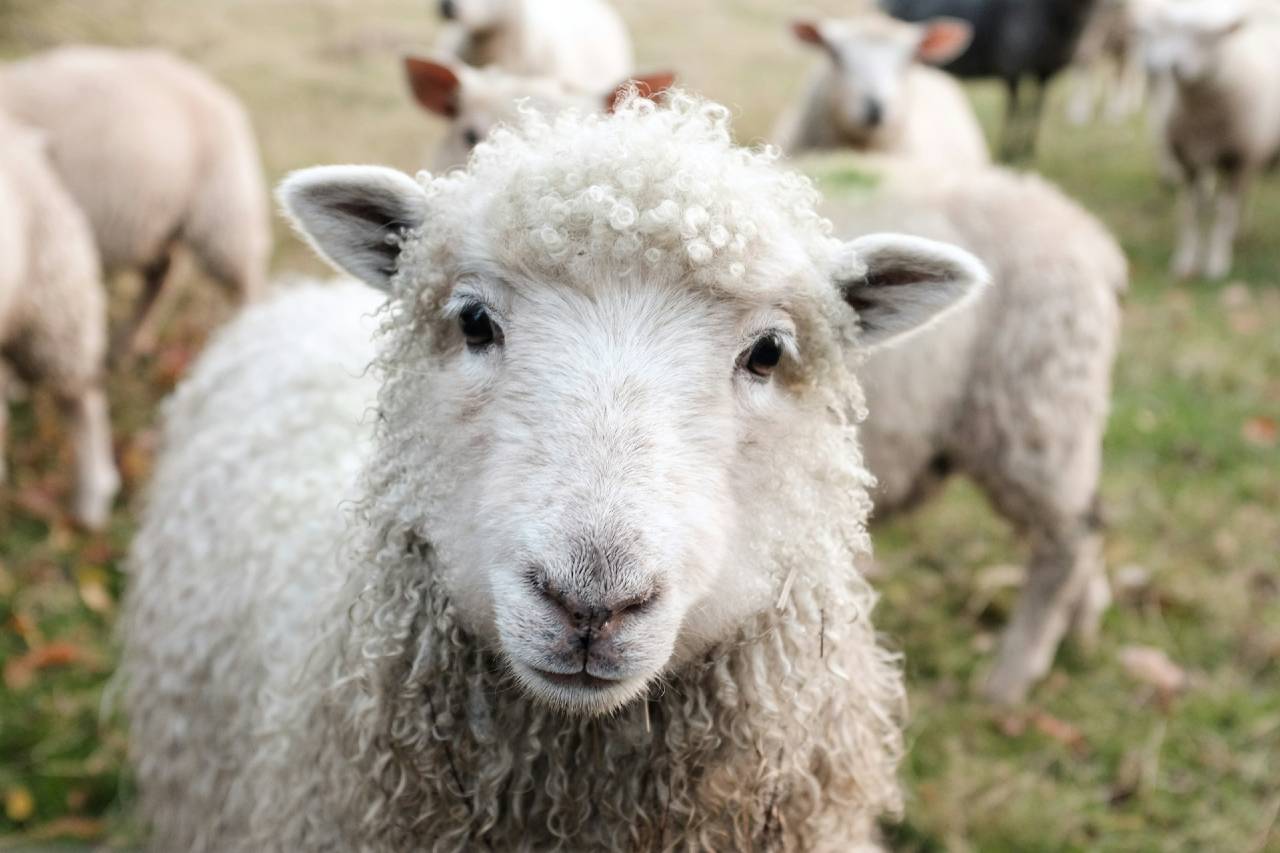
Jesus likes to talk of sheep and shepherds. And it continues to be among the favorite linguistic patterns for people of faith. We talk of leaders as shepherds and their people are their flocks. It is all so easy for us.
And yet, at the same time, we aren’t terribly interested in learning about the psychology of livestock, which might complicate our use of the image. Sheep become a shorthand for dumb, mindless followers who are in need of Jesus’s generous kindness and love.
We ought to be more careful with the image. And it is strange that we continue to resonate with an image we know so little about.
Especially when it comes to our relationship to our neighbors.
The hyperindividualism of 21st century American can’t contend with the truth that sheep flock together. That Jesus isn’t just here to save us from our personal stuff, or that faith itself isn’t an entirely personal endeavor. Our base image for our relationship to him is that we are gathered to care for one another.
This is the dynamic most essential to understanding the parable of the lost sheep. In it, Jesus says to the listener who wouldn’t leave their flock behind to find the one that is lost. And for many who listen to this the answer, if they are being honest, is “Me! I wouldn’t! How could I risk the 99 to go after the one?”
At the heart of that teaching, however, is that Jesus assumes that the ninety-nine aren’t at risk at all! Not because there couldn’t possibly be a problem in the wilderness, but because they, together, will be fine. Why? Because they have each other.
This is is the reality about both flocks and human nature that are so essential for us to understand. Even if the modern reader refuses to. That flocks provide safety in themselves! And that the purpose of Jesus isn’t to save one hundred different mes, but a single flock of one hundred ewes.
Of course, the flip side of this is also true. If we were to better understand sheep psychology, we might interrogate our own. And then we might be forced to realize that humans need flocks and that we are designed to protect one another. And there are many individuals profiting from our thinking only about ourselves.