
Tragedy in the Crucifixion
Good Friday | John 18:1-19:42
What are we doing here? It’s a weird thing to gather in sadness. To read such horrifying words and call this “good news.” And yet we know, somehow, they are. Not directly. And not these alone. But because of the next part of the story. Where it goes.
And we, today, are in this weird space of knowing the next part of the story and resisting talking about it. Because we need to sit in this moment, in the absence of Jesus longer. This is important for us, in its way.
Here we are, then, constantly trying to make meaning of the crucifixion in light of what God is doing. Trying to make sense of its purpose, as a function of God’s grace-making. And so we may want to make this into sacrifice, into generosity, saying that it is strangely good that Jesus has died, because it becomes something greater. Thank God they cracked the eggs because now we have the omelette!
The Troubling Tension
Yet there was a moment toward the beginning of the Passion narrative in John that struck me as odd this time, given this situation we are in. Right after Jesus’s arrest it says:
“First they took him to Annas, who was the father-in-law of Caiaphas, the high priest that year. Caiaphas was the one who had advised the Judeans that it was better to have one person die for the people.”
It was better to have one person die for the people. Do you catch what is happening? The utilitarian argument of the occupied Temple leadership to protect the people from Rome sounds exactly like the argument many Christians have offered for what God did with Jesus. Sacrificing his life for the world. How do we square that circle?
I think it starts with tension. That there is something cowardly in the leaders and brave in what Jesus is doing. In this way, it is the very difference between murder and sacrifice. In other words, they don’t give Jesus the choice to be the sacrificed scapegoat. And yet, neither does God. Not really.
This also complicates the historic tradition of Christian anti-semitism — blaming the Jewish people for conspiring to kill Jesus when it seems perfectly clear that God was seeming to do the same.
The tension here is painful, isn’t it? And it is fitting that we encounter it with deliberate grace. Because our work is to wonder, not condemn. To interrogate our hearts and motivations and to seek love and reconciliation. Which is hard when we have historic prejudice and troubling theologies to wrestle with.
An Uncomfortable Parallel
I suggest we cop out and not seek an answer to my starting question. Because I don’t think we can. I think, what we have, is an uncomfortable parallel. And one that I think helps reveal the depth of tragedy and the importance of its predictability to expose the nature of God’s grace.
My son is reading Romeo and Juliet for school. He says he doesn’t like it. That it’s kind of stupid. And he’s totally right, isn’t he? I told him I get it and that we all need to read it because it is important and all of that. But think about how much miscommunication happens throughout the play and how much violence results from it? And then, the incredible failure to communicate the faked suicide that leads to real suicide and it is all so tragic and sad! None of that is good.
And yet, what do we say about Romeo and Juliet? That it is the greatest love story ever produced. These two teenagers who hardly know each other and can’t get on the same page and end up dead: that is the picture of love? In a sense: yes! In the way our counter-cultural-obsessed brains work through the paradoxes of living and dying and loving and hating and fighting and flirting, we deduce that tragedy is required for love. That sacrificial acts of throwing one’s life away for love is the greatest thing anyone could ever do.
There is little wonder, then, that we would need to experience that kind of love as a whole people, as the whole world.
But that isn’t the whole of the story, either.
History As Tragedy
We might think of Romeo and Juliet as a love story, but it is actually a tragedy. Its eventualities are death and murder. And the other side of what is revealed to the world on Good Friday is not only the love of God, but its contrast with how absent love is from the Roman Empire. How absent it is from the decisions of powerful people called to protect the Hebrew people. And ultimately, how absent love is from the Temple: the heart of their faith.
We are not to scapegoat Caiaphas or Pilate or the Jewish people. This was a team effort to collude with one of the greatest juggernauts of destruction and subjugation in human history. Lots of blame to go around that has nothing to do with religion or nationality at all.
More important for us, in the time we are in, is to focus on the evil of empire itself and what it would will a person to do. To recognize how it uses fear to manipulate those with some power to hurt and destroy others. How it utilizes the threat of violence and instruments of torture to eliminate the threat of dissent. From parades to public protests.
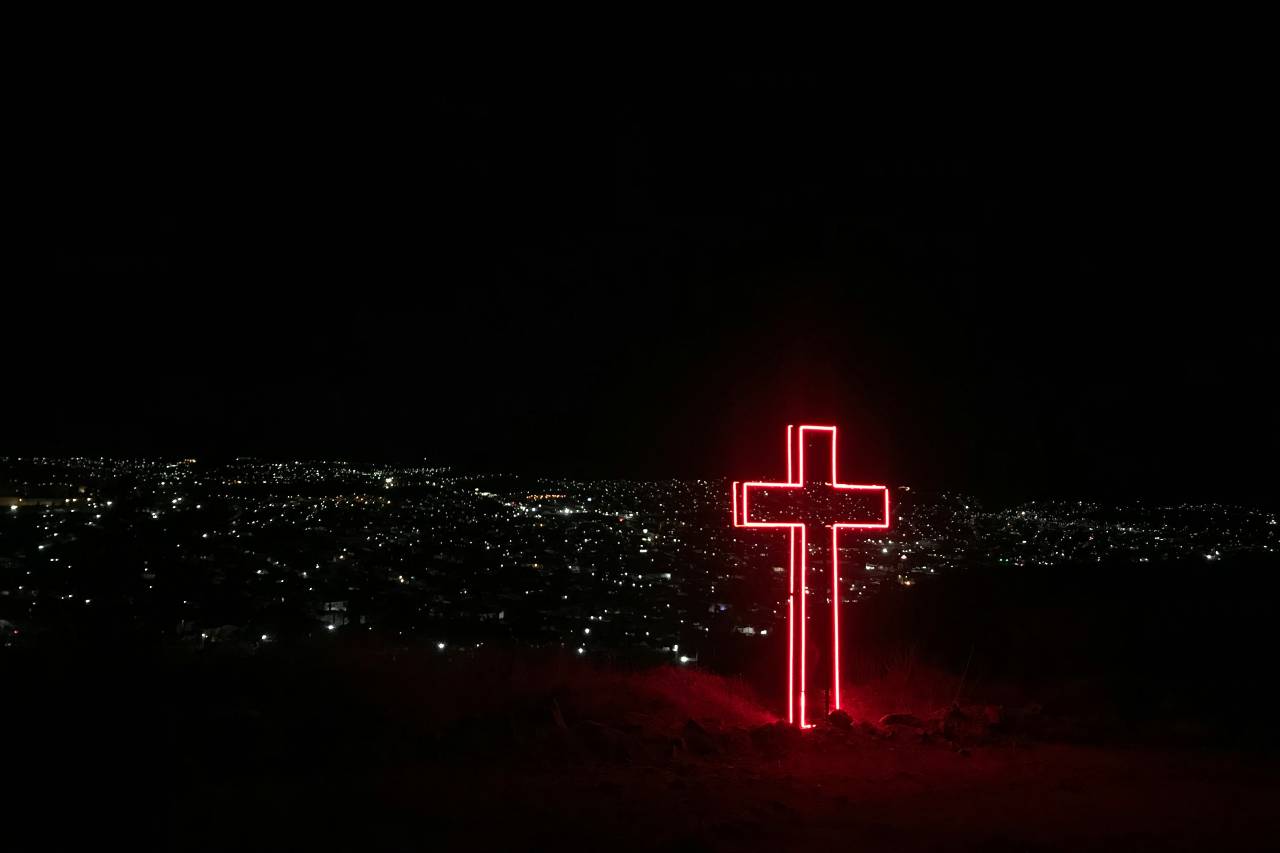
This, friends, is the cross. A torturous means of state-sponsored execution, reserved for only those who stood up as a threat to Rome. They would erect them outside of city gates as proof of their will to violence, leaving people to hang their in an achingly slow version of lynching that often took days for victims to die.
These victims would be high enough off the ground to be seen from some distance, but low enough that one’s feet and legs could be reached by stray dogs, not even a meter off the ground, so that as you died, you could be eaten alive.
The sadism, they argued, was a sign of strength. Meanwhile, they would come to call their enemies “barbaric”.
Remembering on Purpose
We receive the gruesome, violent story of the Passion, not only as a metaphysical love story, but as an intentional mirror to the assumed justifications of the world to reject a loving posture toward one’s neighbors. That we might see ourselves, not as the passersby, but in the Romans and the Temple leaders. That we see the ways we sacrifice our humanity for a few copper coins or the promise of safety. And even who we align with! Often the genocidal who always justify their killing as protection from the violence of others.
This is the cross we continue to bear.
And it is why we must remember every single time we read the Passion that it was those of our ancestors in faith that chose to hate rather than love. Who chose violence and murder of the Jewish people, blaming them for the crucifixion; blaming the people and the religion for the actions of the Roman Empire. And we remember the way the Roman Empire adopted Christianity and took their symbol of state-sponsored torture and execution and made it the symbol of our faith, emblazoning it on shields they used to pummel their adversaries.
And we adorn our churches and bodies with it. Which is why it burns my chest to wear one like I’m wearing a miniature electric chair around my neck. Jewelry that acts like a noose.
Atonement
We gather today to remember because we need to remember. And what then comes from remembering? Hopefully atonement. Our need to reconcile with ourselves, our community, and our God.
We can do this today because we know what is coming. Because we know the next part of the story. It isn’t a surprise that we’re anticipating like the next Spider-Man movie. We get it. And because we get it, we are invited to sit in this for a day. To sit in our collective failure to fully realize the Kin-dom of God yet. We haven’t finished the work.
There are times when we got lazy. And we can talk about the support for war and slavery and bigotry for the entirety of this country’s history. Let’s not forget about the giant step backward called The Crusades. And don’t even get me started on Constantine and the empire’s transformation of our faith.
So many examples of what not to do. But today, better than any other day, we can turn our minds to how people have messed up and long to make it right.
A Perfect Opportunity
The Passion is perfect for us, then, because it reminds us of the Devil’s temptation to power and security is rooted in fear. Fear of death: physical, literal death and the kind of little death that is experienced in aging, in changing, in things we love going away.
That this impulse to protect and to condemn the change itself, which always feels good and virtuous, is often rooted in our most dangerous temptation: fear. Because fear leads many to throw away the teachings of Jesus and the faith of our ancestors. For what? The Judas bargain?
We remember that it is love that is paramount. Love that leads to hope. Hope that leads to faith. Faith that leads to trust. Trust that is at the heart of security. Because, as Jesus taught at the last supper, the secret is that we serve each other.
Let us remember today so that we might serve. To serve our families and friends and neighbors. Strangers, even. Serving, sacrificing, loving. This, more than any other thing, is our work together. Because, what is always behind service, sacrifice, is love. Love of God and our neighbors as ourselves. Love in creation, in our world, and all of its people. Let us remember so that we might serve, sacrifice, and love today. And may it be enough.