
I struggle with a common affliction. One we might call: “We Might Need That”. It is a disease often inherited, but it can be situational. We can find the evidence in boxes of cables in the garage or the junk drawer that is stuffed with batteries, manuals, and hex wrenches from Ikea projects. It can also be art supplies, yarn, or old pans. Those things we keep moving out of the way so we can get to the things we’ll actually use. But we never get rid of them.
The central concern of this disease is that we have a thing now that might be useful in the future. And if we get rid of it, then we won’t have it. Most of us who experience these symptoms have had the frustration of replacement. Of going to the store to buy something we used to have. Something that was perfectly fine, but it seemed so ridiculous to hold onto. That second purchase burns.
Or perhaps we are moved with desire to be useful. To be the person who has it. So when the four-foot HDMI isn’t long enough, we have a six-foot cable on hand. Like Mighty Mouse, we’re saving the day.
There is an internalized pressure to the idea of being prepared. And one that is named as virtuous. From scouting to the gospels, the idea of being prepared is paramount.
The Big Sort
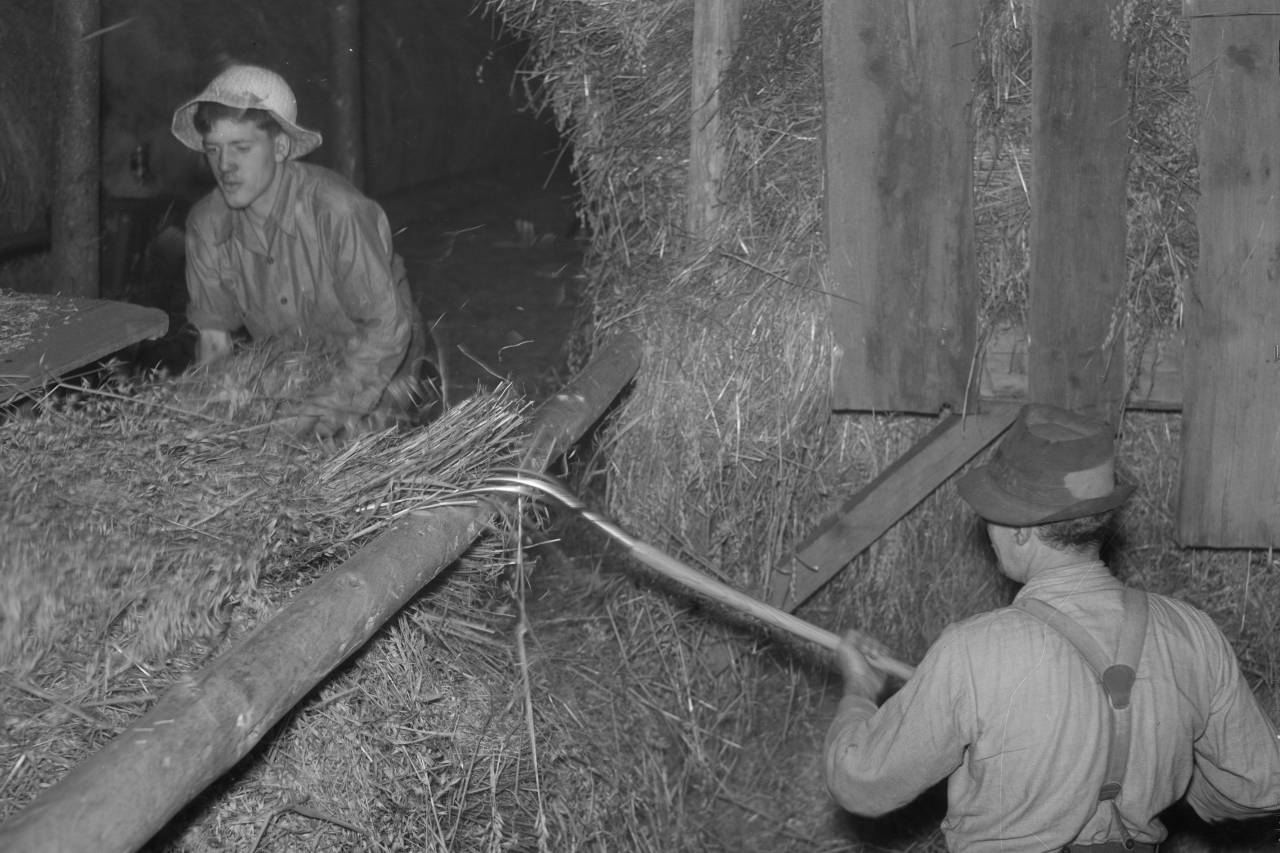
The kind of winnowing John the Baptist describes the Messiah doing is not like this at all, however. He says that the Messiah will come to sort us. And hopefully we’re the wheat.
The Messiah isn’t afflicted with “We Might Need That.” And this sorting seems very different from the cables in our garage. We might call it “being decisive,” and it is, but I think the better articulation is unattached. Unattached to the “could be” and convicted to support what is: about our lives, our loves, our justice.
This is a different kind of decision-making.
When we struggle to throw away old cables, we’re preparing for a hypothetical future.
God’s focus is on what we are actually doing with our lives — and our neighbors.