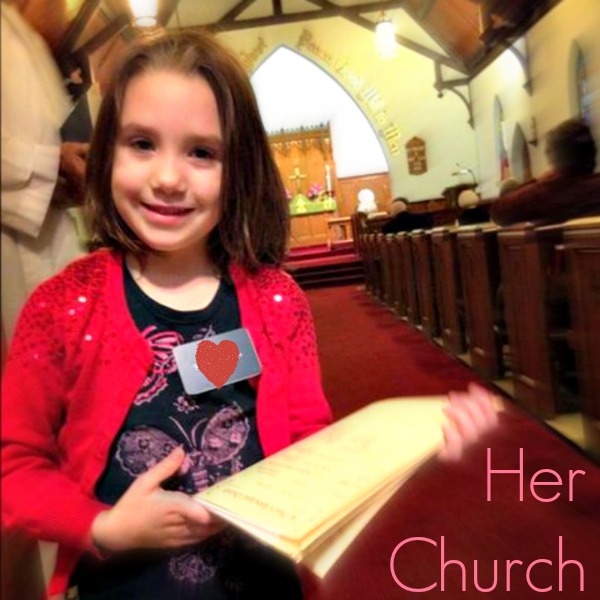
What is a Sacrament?

Over the next three days, I’ll briefly explore the nature of our sacraments. Starting with what we actually mean by the word.

According to the Book of Common Prayer (pp. 857-8):

The sacraments are outward and visible signs of inward and spiritual grace, given by Christ as sure and certain means by which we receive that grace.

Many of us can recite the first half of that definition: the part about their being an “outward and visible sign of inward and spiritual grace”. But when we call something a sacrament, what are we really saying? Primarily that this (to whatever we are referring) is the observable part of something bigger. Like the water in baptism or the thin wafer many of us use for Communion. That these are something physical and observable, that direct us to something more than that.

Perhaps more difficult is the second half: that these are “sure and certain means” of receiving grace. Most challenging, I think, based on the way we think and behave, is that we are able to receive grace through physical means or that our “sacramental” habits possess in them the very grace “given by Christ”. Like Calvin, we might see that thin wafer, as just a wafer. We also need not adopt an understanding that is hard for our post-Enlightenment brains to comprehend: namely that the thin wafer that tastes like Styrofoam is somehow magically turned into a person’s flesh who has been dead for 2000 years. But we are being invited into a mystery in which that wafer becomes more than a wafer.

We may have to get what is meant by grace:

Grace is God’s favor towards us, unearned and undeserved; by grace God forgives our sins, enlightens our minds, stirs our hearts, and strengthens our wills.

For us, then, the sacrament is a hint at the world beyond this one and are something we do together. They also exist as a means by which we can know and sense that GOD-given grace. It is no wonder, then, that the sacraments involve a physical nature: water on the skin, food and drink in the mouth, oil on the forehead, hands on the head and shoulders. Sacraments are intended to be experienced in our bodies, not merely our minds.

This, then, is the story of sense and understanding, of feeling and thinking. The sacraments can’t be confined to one way of comprehension.

Tomorrow we’ll explore some of the messy history of sacraments.

In the meantime, what is your experience with the sacraments? How do they feel? What do you think? And how have they worked?

Uncovering Love

a Sermon for Easter 5C
Text: John 13:31-35

Love Each Other. Too Obvious?

Sometimes we have a selection from scripture that is too obvious. We understand where Jesus is going and what He’s getting at. Today is one of those days.

Jesus gives a new commandment, something he pretty much never does outside of this, and says “love one another.” Something so simple, direct, sensible.
“Just as I have loved you, you also should love one another.”
and
“By this everyone will know that you are my disciples, if you have love for one another.”

What’s our action? Love each other. Our calling card? Love each other. How does the world recognize us? We love each other.

This is so clear, so ready for us. What makes much less sense to us is how Jesus gets to that revelation. Let’s think of Jesus as a teacher in front of the classroom, standing at the blackboard. He is explaining a theorem in calculus and we are sitting there, eyes glazed like donuts. Then he arrives at the solution and we snap out of it. The pencils leap up and we all write out the solution. “Love.” There! We found it!

This makes a certain amount of sense on its own. Most of us have gone through the lectionary and heard these things before. We have lived lives of faith. We aren’t in basic math—or at least matriculated from that years ago. Perhaps we can just get some tips for better living. That might help. Preferably something easy. We’re simple people, after all. We like that “love” stuff.

Timing the Glorification

You can see that this story is from Chapter 13 in John, which takes place on that auspicious Thursday. Jesus washes the disciples’ feet. Judas leaves to betray them. Jesus gives them his only command: to love. They eat.

Throughout this gospel, Jesus makes reference to the hour of glorification (including 4:23, 7:30, 12:16, 12:23) not yet here, and now Jesus announces that this is that hour: “Now the Son of Man has been glorified”.

This is that moment. And for us to understand that command to love, we have do the work. That means dealing with this moment and glorification.

Protestants argue that Jesus’s glorification comes through the cross. Friday. In the death and the blood, Jesus becomes the vehicle by which we might all be saved. At the point of death, therefore, is the moment of victory.

Catholics argue that Jesus’s glorification comes through the resurrection. Sunday. In defeating death, Jesus destroys death. That, in rising from the dead, Jesus’s true glory is found, therefore we celebrate the arrival of victory.

Anglicans, I suppose split the difference. Saturday?

And yet Jesus announces that He has been glorified as of Thursday. How is that possible?

The Overlapping Events

I think it has to do with this moment. If I understand His work, Jesus is saying here:
1) The Son of Man has been glorified and
2) In him, GOD has been glorified.
3) If this is the case, then
4) GOD will glorify the Son of Man in himself immediately.

This moment is Jesus’s final teaching, His final moment of intimacy with His followers. A moment that begins with service, humbly cleaning his disciples’ feet in a ritual of purification. Then Jesus announces what Judas has planned and tells him to go do it. Then He commands them to love each other. Then he foretells Peter’s denial, speaks of GOD and the Holy Spirit and of many more things. He says they are not servants, but friends.

It seems that what has happened is that this last time of intimacy, of service and sharing and love is the moment of glorification. Because they are ready. It isn’t about Jesus anymore, but His followers.

This is why He tells them that they can’t follow where He is going, but that they will. I will no longer be with you, but when you get together, I will be there.

The Jesus Event will soon be done, but the event it inspires has already begun. How will we know this is the case? By followers loving each other.

Our Inheritance and Our Mission

This isn’t some spiritual guru do-gooder with a self-help message saying good things happen to people when they love. It is Jesus reminding us that we have taken over for Him. That we are doing GOD’s work here. And that we know we’re on the right track when we love each other. When we wash each others feet. When we pitch in when someone loses a job. When we are eager to help our children know what it means to be loved, rather than scolded or scorned.

Jesus tells us that this work requires that we act together. We can’t be Christians alone, but we can be the only Christian in a room.

We are the inheritors of that event. We aren’t telling people about a Palestinian Jew who died 2000 years ago, but a Lord who liberates us today—whose power flows through us when we gather in service and worship.

We are also the builders and the creators of a new event. An event for here and now. For this community and this people. We are not protecting precious artifacts, but making new, holy icons of our faith. Icons written by our love.

For when students become teachers, their teachers are glorified.

Peter Jumps Into the Water

This week’s gospel from John 21 deals with nudity, miraculous fishing, and redefining love. It is a jam-packed resurrection appearance that only could be delivered by that incredible gospel we call John.

One part sticks out for me this week. And it obviously deals with Peter.

So the disciples are fishing. They are hanging out. And Peter is naked. The suck-up “beloved” disciple sees Jesus is cooking some breakfast on the shore and then what happens?

When Simon Peter heard that it was the Lord, he put on some clothes, for he was naked, and jumped into the sea.

The narrative doesn’t say what happens to Peter or what the hell he is doing. It says what the other disciples do. They listen to Jesus.

When confronted with a text like this, we are tempted to do two things:

  1. Fill in the gaps
  2. Speculate what “really” happened

And most gap-filling and speculating on this seems to miss an incredibly important truth.

The evangelist didn’t say Peter swam to shore. It doesn’t suggest Peter did anything important other than jumping into the water.

Later on, it ties it all together when it suggests that Peter goes into the boat after they are ashore and alone brings the fish that Jesus asks for. There is a great metaphor of Peter leaving the boat and entering it again on the shore to present the fish hauled into the boat by the other disciples. It is a fascinating literary juxtaposition.

What was clearly important to the Johnine community was not how Peter comes to shore, why he was naked, or how he covers himself up; things which cause all manner of speculation by us; but that Peter was naked, clothed himself, and jumped into the water.

In the end of the story, we learn about the clothing himself and about the nakedness from how Jesus speaks to Peter. That’s what I’m preaching about tomorrow.

But I think there is something really amazing about this moment, in which Peter’s response to Jesus is not

  • “Do my best” or 
  • “Listen to His instructions” or
  • “Get to Him as fast as I can” but simply
  • “Jump in the water.”

I don’t know what it really means. It certainly doesn’t seem like the writer intends for us to believe he swam to shore because he was so eager to see Jesus, because there isn’t the slightest hint of that in the text! And it seems like an odd thing to write as a set-up for a literary tool that shows Peter getting back into the boat on the shore. It is far too odd and dramatic for that.

Perhaps the beauty of this story is that it is so thoroughly a human response to the divine. That we hide our nakedness like the first human. That we do inexplicable things when confronted with the miraculous. That sometimes we don’t pull our weight and sometimes we carry the whole burden for others. That sometimes we are shown compassion when we come up short. That sometimes we strive for ideal and get above average.

This is also the same Peter that denied Jesus after defending him, lopping off an ear in the process. The same Peter that named Jesus “Messiah” but was then named “Satan” for declaring that Jesus must not die. It is a man that does such good and noble things, then such cowardly and petty things.He isn’t the everyman, but the polarity. He is us when we are right and wrong.

In jumping into the water, Peter does the inexplicable. The writer(s) doesn’t say that Peter was ashamed or that he was eager. All it says is that he got dressed and jumped into the water. Perhaps the lesson for us is to wrestle, not with the rational, but the irrational.

Perhaps it is a truly human moment–an artfully inexplicable moment–that defines us. That defines humanity. That we, like lemmings, simply jump into the water.

the sea

Proof the U.S. is not a Christian Nation

Image

Chart courtesy of Think Progress

Chart courtesy of Think Progress

Of course, this image demonstrates that people don’t really want to cut anything from the federal budget. Except one thing. You know, the one most Christian thing on this list. That, they want to get rid of.

Our Quarantine

a Sermon for Lent 1C
Text: Luke 4:1-13

desert 2
Quarantine

In the ancient Middle East, there was a traditional custom of a Sabbath Quarantine. One would go out into the desert for an extended time. Imagine. The sand swirling about you, sneaks into your clothes, your hair, your teeth. You would soon feel dirty and uncomfortable.

The sand would also exfoliate your skin, scrub the dead cells off your body, and the wind would blow it away. The desert provides a natural buffer to your skin.

The time alone would provide a similar challenge of boredom and self-discovery. You would learn much about yourself, both the stuff you like and loathe.

This story comes as a surprising first move after baptism. Jesus exiles himself for 40 days as a Sabbath quarantine. And it is in the midst of this personal journey that the Devil comes to test Jesus. These tests deal with three desires:

  1. to satisfy hunger for physical needs
  2. to satisfy hunger for power over others
  3. to satisfy hunger for intellectual proof of GOD’s power

And Jesus overcomes them. Phew! Thank GOD that’s over! What’s next?

The Problem of Evil

Of course, that isn’t the point. It isn’t merely Jesus versus the Devil—or a swap of Jesus in for Job. These trials Jesus faces are essentially human aren’t they? Essentially ours. We hunger for food, power, certainty. We accept the way of the world and ask GOD to prove divine power. But in each of Jesus’s responses, we see the relationship of GOD and humanity.

  1. We don’t see human independence, but mutual dependence with GOD.
  2. We don’t see human power over others but service to GOD.
  3. We don’t see physical proof of GOD’s divinity but assurance of GOD’s presence in times of true need.

The vision of GOD Jesus reveals in this trial is actually a GOD that doesn’t believe in tests or trials. GOD doesn’t seek proof of our devotion or give us stuff to handle.

Is it the Devil then? This adversary so easily defeated, this tormentor is the sole instigator of, not only Jesus’s trials, but our own? Is evil in this world so much the influence of another source?

That question is answered in the next few verses, when Jesus goes home and preaches in the synagogue. Remember the story two weeks ago? Jesus goes home, preaches and the people love it…up until Jesus calls them out for not really listening. Then they move to kill him. That wasn’t the Devil. That was people. Otherwise good people. Scared people.

Will you be my Valentine?

Jesus heads out into the desert to be tried. The very nature of what He was doing was a sort of self-imposed test. A test that would challenge Him physically, emotionally, intellectually, and spiritually. It wasn’t supposed to be easy.

What it reveals, then, is the source of evil is not the Devil, people, or even GOD. It is our many desires, born out of our lack of intimacy with GOD. Our craving for comfort and power and will. Our desire to be right, to be good, to be God. To be independent from GOD and not mutually dependent with GOD.

Jesus survives the trial, not because He knows the right answers or believes the right things or puts in the right effort. He survives because He gets that it is all about relationship. It is all about intimacy with GOD. He is not being the right way, but becoming the right co-creator.

Jesus goes out into the wilderness prepared for survival because He isn’t responsible for His hunger or His power or His being from death. Nor is he foolishly expecting GOD to show off with a mighty hand to save for His intellectual validation. He went out knowing He loved God and lives in service to GOD’s mission.

Unsatisfied

We come into Lent with an understanding of our place in humble service to GOD. But as Pastor Rol charged us on Wednesday night, we are called also to a certain boldness. A boldness in proclaiming a different way from a culture which isn’t itself imbued with holiness. A culture of injustice and anxiety, of pain and rage, of feeding our hunger for meeting our physical, emotional, and intellectual needs for satisfaction, superiority, and certainty.

If everyone could grab a Prayer Book and please turn to page 264. This is what we heard was the purpose of Lent:

Dear People of God: The first Christians observed with great devotion the days of our Lord’s passion and resurrection, and it became the custom of the Church to prepare for them by a season of penitence and fasting. This season of Lent provided a time in which converts to the faith were prepared for Holy Baptism. It was also a time when those who, because of notorious sins, had been separated from the body of the faithful were reconciled by penitence and forgiveness, and restored to the fellowship of the Church. Thereby, the whole congregation was put in mind of the message of pardon and absolution set forth in the Gospel of our Savior, and of the need which all Christians continually have to renew their repentance and faith.

These three:

  1. Preparing to reject our world and embrace GOD’s creation.
  2. Bringing back in those that have broken community.
  3. Turning our hearts to mercy and forgiveness.

For us, this 40 days isn’t just navel-gazing. It isn’t just about getting healthy. It is about rejecting evil and standing for the battered and broken and becoming a people of mercy and forgiveness. Each Wednesday night from now until Holy Week we will explore our mission in this beautiful creation with these three things in mind. Please join me this season in this self-discovery. Let us make this a true season of preparation; preparing for much better things to come.

GOD is here

a Sermon for Epiphany 4C
Text: Luke 4:21-30

brick wallThe teacher is kicked out of school

Jesus approaches the front of the synagogue, is given one of the scrolls of Isaiah and Jesus reads out:

“The Spirit of the Lord is upon me, because he has anointed me to bring good news to the poor. He has sent me to proclaim release to the captives and recovery of sight to the blind, to let the oppressed go free, to proclaim the year of the Lord’s favor.”

He hands the scroll back to the attendant and sits down. Then he tells the people that

“Today this scripture has been fulfilled in your hearing.” 

It appears that more is said. Jesus no doubt “opened the Scripture to them”. And their response to this is amazement. Clearly Jesus is charismatic. He is intelligent. He is thoughtful. He connects with them where they are at. They hear in Jesus the very voice of GOD.

What amazes them, however, is not GOD. It is that Jesus is a carpenter’s son. That Jesus used to run around here in diapers. Now look at him! That education really did him well. They tell him so. They tell him how amazing this is!

Jesus responds by telling them how the conversation is going to go: You are going to quote scripture at me that is supposed to make me feel a certain way and then ask me for the same blessings others have received. Well, you know how a prophet isn’t welcome in his hometown? You know how GOD ignored the Hebrews during Elijah’s time and Elisha’s? And the people drive Him out of town and try to kill Him, but Jesus walks away.

Walking out

Jesus walks out on them. He has infuriated them, caused so much rage to well up in them that they are looking to kill him. What makes them mad enough to actually try to kill him?

I have a few ideas. Notice, though, that nothing He says should cause their extreme reaction. Their response isn’t justified. Nor is it exclusive to Jesus’s hometown. I think there are two different reasons: Jesus has too accurately described them—showing how far from GOD they are and by highlighting that GOD will withhold grace from some. Therefore Jesus will withhold from them.

If this story doesn’t hit too close to home with us, then we aren’t actually listening. Jesus tells us that our merciful GOD withholds grace from people. That GOD did it with the Hebrews and Jesus does the same with his childhood neighbors and friends.

No doubt many of us know what it is like to live without feeling the nearness of Christ. Or that we have done something to reject GOD—to send GOD away from us. We have hurt our relationship with GOD and worry that GOD will write us off—that Jesus will just walk away.

For others, the suggestion that GOD doesn’t match the vision they have carried since childhood is cause for outrage, even violence. How dare we make these claims about an unchanging, distant GOD of the 1950s!

Fulfilled in hearing

Jesus says in response to the Scripture he read from Isaiah:

“Today this scripture has been fulfilled in your hearing.”

He doesn’t say Today this scripture has been fulfilled in my birth or Today this scripture has been fulfilled in my magic powers. He says that it is fulfilled in your hearing.
What is lost in the confusion of this story is that Jesus is present with them. Jesus is there. His proclaiming the Good News “to let the oppressed go free, to proclaim the year of the Lord’s favor” and their presence with Him is the big deal. Their marveling about Jesus’s skill matches with their ignorance to Jesus’s presence. They worry that GOD is far from them or that GOD can ignore them, but GOD is right in front of them!

Jesus tells the parable later in Luke that we often call “The Prodigal Son” (or what I call “The Lost Sons”). In it we have a young man leaving his family behind and then coming back, destitute, to be reunited with his father. This is often told to highlight the great forgiving and merciful nature of GOD. The elder son, however, is just as lost. But he isn’t lost out there somewhere, he is lost right here, at home. He feels abandoned and far from his father; even going so far as to calling their relationship one of slavery. But the father was there the whole time. He was with him, working alongside him. The elder son didn’t understand the relationship. His distance from his father is self-induced.

The problem for these people in the story then, is not that Jesus walks away, it is that they walk out on Him.

The presence of GOD

Headlines were made more than a decade ago when Mother Teresa’s personal journals were published. Millions wanted a glimpse of the innermost thoughts of one so devoted, so publicly faithful, so representative a Christian life and service. The biggest story in them was the revelation that most of Teresa’s adult life was spent without the intimate presence of Christ she had earlier on. She even lamented the feeling of distance she felt from her Lord. And yet, this great epiphany was lost on the multitudes: that her service wasn’t based on constant presence or the reward of divine intimacy in exchange for good behavior, but that GOD was up to something good in her. Her belief in the Triune GOD supported her and drove her, not because of constant affirmation from the divine source, but in the trust that Jesus was right.

The struggle with faith in Jesus is that we have been promised His presence, and yet that promise goes first to the needy. Not when we feel needy or when we want the status quo to be maintained. His presence is most felt when we hear Him from a place of need. A need for repentance, a need to be drawn back to GOD, a need to be moved. To hear the call to transformation, not as an invitation, but salvation, rescue. When what we need is to be saved from our surroundings or from our current lives. To be changed from our earthly selves into people of a different way. Jesus doesn’t come to preserve the status quo, but rescue us from it!

Indeed GOD is here.


[see also my video response to the text]

The Incarnate Spirit

a Sermon for Christmas

Merry Christmas! We have joyously arrived at the eve of Christmas, that day in which we celebrate, not just the birthday of a special child, but the very incarnation of GOD: GOD’s incredible presence with us and in our world.

It is one of our favorite feasts and holidays. One that brings great joy and fellowship throughout our world. And hopefully most of us feel so joyous after a particularly rough season of Advent this year.

Tonight, we celebrate the kickoff to a great season characterized as much by our family experiences of divine fellowship as by A Charlie Brown Christmas. A time in which our experience of the power of GOD’s work in our lives is found where it always is, in the love and generosity of our friends, our neighbors, and even strangers.

The name we use for the holiday is Christmas, which is not a description of the holiday itself, but the traditional Latin celebration of the holiday in the Christ Mass: three masses at night, dawn, and day, to celebrate three aspects of the Incarnation. A more fitting name for the holiday may be the Feast of the Incarnation, the day in which we celebrate in worship the coming of GOD’s holy Word in human form, that Jesus would be born as a human, live as a human, and would die as a human.

We are also reminded in the Incarnation that Jesus didn’t come once, 2,000 years ago, only to stay away. That Jesus comes to us and will return to reconcile the world. This understanding of this feast day means that our focus isn’t only on that little baby, but on the promise of change and transformation that comes with him. The promise that we will be changed inside and out. As individuals and as a society. And that our work is found in bringing that change to the world and in Christ’s name.

And this is the rub; the part that continues to challenge us. The Incarnation, then, isn’t just about GOD coming among us and Jesus being born or even the promise of Jesus’s return. The Incarnation means that as Jesus came as the Word among us, we are to become incarnational. That we are part of GOD’s revolution. We are compelled by Paul to be the hands and feet of the Body of Christ, the living embodiment of GOD. We are compelled by Jesus not to act certain ways but to be certain people. We are to live intentional, Spirit-filled lives of devotion to GOD, the holy trinity.

Tonight, as we sing, eat, and drink, may we see Jesus in one another. That little bit of magic we foolishly call “the Chrismas spirit” is not really magic. It is not the result of a seasonal incantation. It is truly the Incarnate Spirit, the very work of GOD in us. Bringing GOD’s priorities of love and joy and service out of us.

May we share that spirit gracefully.

Who He Will Be

a Sermon for Epiphany

Text: Matthew 2:1-12

Mixed Origins

Today we celebrate The Epiphany: a church holiday with two origin stories. A day that we know is important, but have trouble with understanding why. A day that pales in comparison to Christmas, and yet the church has historically understood as greater. In the Epiphany, we have a holiday that is confused, but may serve as a blank slate. A day to celebrate GOD in inspiring ways.

One of the first feast days, the Epiphany began in the East to mark the Baptism of Jesus. Adopted more than a century later in the West, the subject was changed from baptism to the Wise Men, giving the day a far different character.

In the East, the focus was placed on Jesus and His ministry, while in the West, that focus was obscured with other characters: the Wise Man, the Holy Parents, the Star, even GOD’s providence are placed in front of Jesus and His mission.

And yet, historically, the emphasis has been about Jesus: that this feast day is supposed to be about Jesus’s reach beyond Jerusalem and the Hebrew people. That Jesus was born to save everybody.

The Wise Men show up to my office

The Wise Men show up to my office

We don’t treat it that way. We treat it as the capstone of the Christmas story. Even those of us that are liturgical snobs about it are aiding in that interpretation. Don’t let the Wise Men near the manger scene before the 6th! We shout. Keep them isolated! They haven’t arrived yet! And now that they have arrived, perhaps taking the long journey from the back of the nave to the front, we can breathe a sigh of relief. Ah! It is finished! And shortly we will pack the whole set up and put it away and we can move on, because the story is over.

Mixing Up the Story

This is a testament to the power of the story. The story of a baby born in the manger because there was no room in the inn. The mild mother, the stoic father, the animals, the shepherds, the angels. The Christmas story as we receive it every year is one of the most evocative stories in the canon, as we feel it every year. We even feel our hairs bristle when Linus reads it at the end of A Charlie Brown Christmas. And because it is so powerful, when the Wise Men finally arrive, bringing those strangely adult gifts to such a little baby, we understandably close the book. We feel as if this is a natural ending. It is, aside from that strange story in Luke of a 12 year-old Jesus visiting the Temple, the last word on Jesus before He begins His ministry.

But seeing The Epiphany as the end of a different story obscures that very understanding the church has maintained about the day from the beginning: that the day has less to do with who Jesus is and more to do with what Jesus has come to do. And I think we do that on purpose. Not truly intentionally. We just get caught up in Christmas and so we sing “We three kings from orient are” alongside “Joy to the World”. We also take that visit from the Wise Men out of its scriptural context. We pay attention to the visit, rather than the drama that surrounds it.

How They See Jesus

The evangelist we call Matthew has given us a great way to see this afresh. The Holy Family has returned home and time has passed since the dramatic birth. Some fortune tellers arrive in Jerusalem, looking for the subject of the signs revealed to them. Herod is frightened and tries to get more information about this baby. He sends the fortune tellers out and secretly plots to have killed all the boys born during a certain window of time. This, of course, is a not-so-subtle reference back to the time in which Moses was born, casting Herod as the villain, Pharoah.

This story is really nothing like the Christmas story. It involves an unlikely triad of foreigners coming to pay homage to a future king and a terrible earthly king, who gained power over the Jewish people by force and is directly aligned with Rome. It has a star that is able to move in the sky and stop through only the metaphysical power of GOD.

Even these crazy gifts: not a rattle, blanket, or package of Huggies, but money, incense, and perfume: are fit not for a baby, but for a king. When these foreigners arrive at the humble home of this messed up family, they don’t walk in to a tear-jerking soundtrack, with a Hollywood starlit holding an adorable infant; this isn’t a scene from a movie that warms our hearts in that way. They come in and they behold the future king. They bow down and give Him kingly gifts. And then they sneak away, trying to avoid the treachery of King Herod.

How We See Jesus

We know the word, epiphany in a different context. We know it as a word for revelation. “I just had an epiphany!” is a way of saying truth has been revealed to me. That understanding should color the way we are to see this day. After all, this is not Three Wise Men Day, but The Epiphany, The revelation. The day in which we commemorate who Jesus is revealed to be. The day we celebrate, not a cute, little baby, born in difficult circumstances, but the One who will transform the world. The One who has come to free us from bondage. The One who walks a different path—and calls us to follow.

On this day, the scope of GOD’s work in the world through Jesus is made plain. We can see that anything short of being different from the empire that controls us and walking a path that rejects that domination and violence is not discipleship. Jesus, the anti-king is revealed as liberator and savior. The powerful fear Him and take drastic action to prevent his ascension to power. It is a shocking and challenging vision that calls attention to not who Jesus is, but who Jesus will be; not who is emotionally affected by a little baby, but transformed by the Incarnate Word.

May we carry with us this vision of Jesus revealed by three unlikely foreigners: a vision that challenges us to see past our own comfort and to instead see who we are to be. And may we constantly seek what it means to follow the path Jesus continues to set for us.

Mary, the Witness

a Sermon for Advent 4C
Text: Luke 1:39-55

Learning about Mary

One of the things that excited me as a priest and presbyter of the church is how many people have mentioned Fr. Steve Bancroft’s sermon a year ago. Several people have come to me and spoken of that moment in which they heard for the very first time some new things about Mary, the Mother of God.

Most poignant is what textual criticism has revealed about the word, long translated into English, thanks to the King James Bible, as virgin is actually better translated as “girl”. In fact, there are three similar words in the Greek relating to young women. There is one that would be translated into English as “virgin”, and yet, Luke uses the Greek word least descriptive of her sexuality. The one that speaks more to her age and place.

This discovery for many here was as profound as it is to all of us that have heard it: that our picture of Mary is incomplete. And actually, quite troublesome. That our interest in Mary is as an appropriate vessel for God, for her sexual status was of greater import than her social status.

Nothing could be further from the gospel than that.

Why Mary?

Our picture of Mary, thanks in no small part to the many Christmas pageants we’ve endured and the TV specials and the annual services in which virtually everyone who claims to be a Christian actually shows up to church, speaks to her mostly in relation to the birth—her status as a virgin, being engaged to Joseph, to the humble stable birth itself—but little to the more pressing question: of all the girls in the world, why does GOD pick Mary?

We assume that because GOD picks Mary, we should then notice her. That her importance for us comes in being selected as the great God Bearer. And because GOD has selected her, we can look to see what GOD sees in her.

And yet, Luke gives us a vivid picture of Mary before the birth, in which Mary herself responds to her situation. Her response gives us a better understanding of who she is.

Who is Mary?

We already know Mary is a girl. We often see the suggestion that she is probably around 14. She is engaged to be married to Joseph, a man. In an example of traditional Biblical marriage, Mary’s father has no doubt made a contract with Joseph, like transferring the title of one’s car over to another party when it is sold. Mary is property. She doesn’t come from a wealthy family and she is not going to a wealthy family. She has virtually no rights or wealth or place in her society.

Not to mention the unmarried pregnancy. The child to be born out of wedlock. The bastard, Jesus.

And in this experience, Mary is given incredible insight into the very nature of GOD. She bursts into song, praising GOD for the good things GOD has done! The spontaneous and grateful response to GOD that isn’t a prayer from a book, or a silent reciting of the Lord’s Prayer in the solitude of one’s room, but a public song of praise!

Singing as we often do, a song like “Praise God from whom all blessings flow!”

She sings that GOD has blessed her, someone with nothing and of no consequence, destined to be forgotten by history, she has been made unforgettable. She has the ultimate responsibility, to not only birth, but raise the savior of the world.

But that isn’t the end of the song.

She sings of GOD’s mercy and strength. GOD’s conviction and support for the low and the marginalized, the poor and the powerless. That GOD favors them—people like her. Perhaps most poignant is when she sings

He has brought down the powerful from their thrones,

and lifted up the lowly;

he has filled the hungry with good things,

and sent the rich away empty.

These words in the past tense describe the character GOD has shown in history and the way GOD interacts with the world continuously: giving “good things” to the hungry and “emptying” the rich; “[bringing] down the powerful” and raising “the lowly”.

The Word came to humanity in the most humble of beginnings, blessing those with nothing, just like Mary.

Our Marys

The more we learn about Mary and her place in the Incarnation, the more difficult she becomes for us in the Latinized world. Mary speaks of GOD’s preference for the poor from her experience as poor. She speaks of GOD’s preference for the powerless as one without power. And for many of us, this is not our situation. We are comfortable. We aren’t the lowly. We have our struggles, of course. But does Mary speak to all of us?

We are convicted by Mary’s description of GOD, and in her very situation. She is not important, but GOD has made her important. She is poor, but GOD has given her a good thing in Jesus. And in this, we are given the image of a pregnant, unwed girl, given the ultimate position.

And yet, we are blessed by this reminder of our GOD’s priorities. That GOD isn’t about making the rich get richer and the poor get poorer. GOD isn’t about worrying about who “deserves” their place in our social order, GOD is about transforming our social order. GOD uses the unlikely servants to convict us and inspire us. GOD is about transforming us to be the generous, caring, loving creations that incarnate GOD’s order. Mary is our challenge to see GOD at work in our midst in the ways we are prone to miss. So that we, like Mary, might discover what GOD is up to. In the coming days, we must keep our eyes open for that is the only way we will come to know GOD!

Worthy

a Sermon for Advent 3C
Text: Luke 3:7-18

(audio will come soon)

Hearing of Tragedy

I couldn’t go to sleep Friday. Most of the day, I avoided the details that were flowing in about the shooting in Newtown, Connecticut. I picked Sophia up from preschool and took her to the park on a sunny and warmish day. I had been determined to give her time that day. When my phone beeped and notified me of the tragedy, I blocked it out. This is not the time I thought. We played. I took her out for ice cream.

at the park

When we got home, Rose and I spent much of the afternoon giving each other knowing glances and guarded our language, not knowing what to say to one another.

It wasn’t until the kids went to bed that I really ventured online to see what others had written. What they were saying. And one thing was made clear: regardless of one’s politics, nobody wanted new angels in heaven Friday. Nobody wants any more.

The sermon I prepared for today continues the conversation about the apocalyptic language of John’s proclaiming of repentance and the coming Kingdom of God. But I couldn’t preach it the way I wrote it. Not the way it came out of me before Newtown.

Naming Evil

What we saw Friday was evil. True evil. And in witnessing evil, we have two obvious tendencies: we look for answers and scapegoats.

We are to have neither.

In this morning’s gospel, we are treated once again to John the Baptizer. And what does he have to say?

You brood of vipers! Who warned you to flee from the wrath to come?

First words out of John’s mouth in the gospel show him barking at the faithful people. The wrath isn’t a hail of bullets, and it isn’t children that John is speaking to, but the faithful, the just. The people who think they have the world figured out. They come to him looking for answers and he yells at them! And when its done, they are baptized in the Jordan!

In the midst of these words that may be hard for us to hear or that convict us for our own unfaithfulness, John challenges us to change. He says “Bear fruits worthy of repentance”. Amazing words.

Repentance

The word repentance isn’t a word we’re used to, but we might think of it this way: it is a relationship word. In the way John is using it, we can repent by turning away from our selfish old lives and turn toward a new one given to us by GOD. Repenting then is an act of rejection of self, of evil, and of our past. And GOD replaces it with forgiveness and mercy and a new future. When we repent, we are entering into a new relationship with GOD, setting new ground rules, and becoming something else.

What John is speaking to, therefore, is not something any of us can do on our own. It isn’t some piece of good work or some important badge that can be applied in our personal lives. We can’t read The Secret or watch some Oprah and be different. We do it by becoming vulnerable enough to tell GOD that we’ve screwed up. That we need some help. That we can’t take this anymore.

And GOD not only listens, but GOD says OK. It’s done. Like a chalkboard that is wiped with a wet sponge.

Bearing Fruits

John gives us a way of understanding how we bear those fruits of repentance. And they are totally in tune with Advent. With bringing the Kingdom. It has a lot to do with rejecting greed. But I hope we hear a different Word today.

The fruits are found in being Kingdom people. In the standing up, in hard times and in tragedies, and saying enough! This world is not my real home. This society isn’t good enough. And bringing change to the world.

On Friday, the usual destructive statements were made about GOD’s punishment, and many faithful Christians believe that GOD is vengeful and wanted those children to be murdered because GOD has been expelled from schools. Well let me tell you something. GOD is not into murdering children. And GOD has not been expelled from school. The real GOD can’t be kicked out. Mike Huckabee’s god has, and for good reasons. But not the real GOD. Revealed to those first followers as YHWH or Yahweh. This GOD that is present with us in our worst moments, that comes out of us when we show real love for one another. That god can’t be kicked to the curb. That god is here with us, whether called or not. That god is with the families of the victims and the perpetrator. GOD isn’t punishing us. Our selfish culture is. This is the reason John came preaching repentance. This is why he warned that one following him is much more powerful. This is why many of us have been baptized in the name of the Father, the Son, and the Holy Spirit. To bear fruits.

We have been called to bear fruits worthy of repentance. Repentance that we must seek and repentance that is joyfully given. It is not a reward for good behavior. It isn’t earned or achieved. It is given. And it begins with our sacrifice—our will to be changed. To be so vulnerable before GOD.

To Bear fruits that come from following Jesus, from helping the victims of tragedy, and in changing the way the world works. To be people that don’t stand for this. That protect children and eliminate violence in all its forms. That care for the physical, mental, and emotional needs of all of our neighbors. That seek not to take advantage of the weak, but give generously of our abundance. To be worthy of repentance, that place, that intimacy with GOD is to be different than this.

As Advent continues, as we pick up the pieces broken in tragedy, and as each day brings us closer to our celebration of the incarnate Word, may we open ourselves up, accept that GOD hopes for more from us, and let us become worthy of that mercy and grace.